Trip at a Glance
- Starts
- Paro, Bhutan (2,250 meters / 7,382 feet)
- Ends
- Kathmandu, Nepal (1,400m/4, 600 feet)
- Highest altitude
- 3,120 meters/ 10,240 feet at Tiger's Nest Monastery
- Difficulty
- Moderate
- Accommodation
- Superior hotels in Nepal (4-5 star) and mid-range in Bhutan (3-4 star) by local standard
- Meals
- Breakfast and some meals
- Activities
- Cultural sightseeing, walking, overland travels
- Transport
- Private transport and flight
- Best season
- April to May, September to October
- Guides
- Local certified guides
What travelers say
Far and High put together an amazing and memorable itinerary for our trip to Bhutan, Nepal and Tibet! I did my homework and compared with other companies what they had offered and priced. We knew we were in good hands at a fair price.
Postak could not of been more resourceful, considerate and friendly during the planning of our trip, his response was always prompt and informative.
Many thanks for the super trip. No complaints. The guides and drivers were excellent and reliable. Touring program was excellent and the guides accommodated changes with ease. Every day was an adventure.
Trip Introduction
A 14-day trip that begins in Kathmandu, Nepal, and ends in Paro, Bhutan, taking in ancient temples, mountain views and the culture of both countries. The highest point of the trip is Tiger's Nest Monastery, at 3,120 meters.
Paro → Thimphu → Punakha → Paro → Kathmandu → Chitwan → Bandipur → Pokhara → Kathmandu
- Thimphu Days 1 and 2
- Punakha Days 3 and 4
- Paro Days 5 and 6
- Kathmandu Days 7, 8, 14 and 15
- Chitwan Days 9 and 10
- Bandipur Day 11
- Pokhara Days 12 and 13
The dashed line joins the nights' stops, not the road.
Day-by-Day Itinerary
Day 1: Arrive in Paro, Explore Cultural Landmarks & Drive to Thimphu
Kuzu Zangpola! Welcome to Bhutan! Your 15-Day Bhutan and Nepal Tour begins with a scenic arrival at Paro International Airport, nestled among the forested mountains of the Paro Valley. After completing immigration and customs formalities, meet your dedicated Bhutanese guide and driver, who will accompany you throughout your journey in the Land of the Thunder Dragon.
Read the full day
Morning — Arrival in Paro & Welcome to Bhutan
Begin with a stop at a scenic viewpoint overlooking Paro Valley, where traditional Bhutanese farmhouses, terraced fields, and surrounding mountains offer a memorable introduction to the country. Enjoy a welcome lunch featuring local Bhutanese flavors before exploring Paro's remarkable cultural landmarks.
Sightseeing arrangements may be adjusted according to your flight arrival time.
Afternoon — Paro's Cultural Heritage & Scenic Drive to Thimphu
Ta Dzong — National Museum of Bhutan
Visit Ta Dzong, a historic 17th-century watchtower overlooking Paro Valley that now houses the National Museum of Bhutan. Its fascinating collections of traditional art, Buddhist thangka paintings, ceremonial masks, historical artifacts, and natural history exhibits provide an engaging introduction to Bhutan's cultural heritage.
Paro Rinpung Dzong — Fortress of the Heap of Jewels
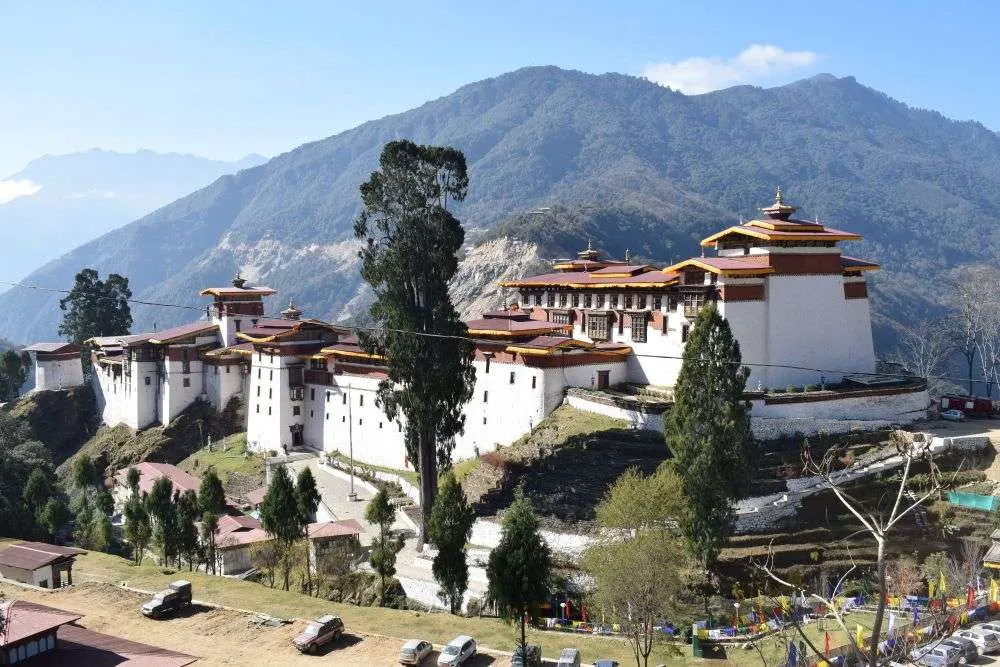
Continue to Paro Rinpung Dzong, an impressive fortress-monastery renowned for its traditional Bhutanese architecture, intricate woodwork, and richly decorated courtyards. Serving as both a monastic center and district administrative headquarters, the dzong offers insight into Bhutan's enduring spiritual and civic traditions.
Tamchog Lhakhang & the Iron Chain Bridge
Depart Paro for Thimphu, Bhutan's capital, following a scenic road through the Paro and Thimphu river valleys. En route, stop near Tamchog Lhakhang, a 15th-century temple associated with the revered Tibetan bridge-builder Thangtong Gyalpo.
Admire the traditional iron chain suspension bridge spanning the Paro Chhu River. Depending on access and available time, you may walk across the bridge to appreciate this remarkable example of Himalayan engineering.
Evening — Arrival in Thimphu & Welcome Dinner
Arrive in Thimphu (2,320 m / 7,610 ft), where traditional Bhutanese architecture coexists with the rhythms of a modern Himalayan capital. Check into your hotel and enjoy some time to relax after your journey.
In the evening, gather for a welcome dinner featuring Bhutanese cuisine, a delightful introduction to the country's distinctive culinary traditions and warm hospitality.
Day 1 Summary
- Maximum/Overnight Altitude: Thimphu — approximately 2,320 m (7,610 ft)
- Driving Distance: Approximately 55 km (34 miles), including sightseeing transfers
- Driving Duration: Approximately 1.5–2 hours, excluding sightseeing stops
- Key Activities: Paro Valley viewpoint, National Museum, Paro Rinpung Dzong, Tamchog Lhakhang Iron Chain Bridge, and scenic drive to Thimphu
- Activity Level: Easy — light walking, cultural sightseeing, and scenic driving
- Meals Included: Lunch and dinner
- Overnight: Deluxe hotel in Thimphu
Note: The day's sightseeing program depends on your international flight arrival time, museum opening hours, and local conditions. Late arrivals may require a shortened sightseeing program.
Day 2: Explore Thimphu's Cultural Landmarks, Local Markets & Scenic Monastery Trail
Today, discover the cultural and spiritual heart of Bhutan's capital, Thimphu, where ancient Buddhist traditions coexist with contemporary Himalayan life. From the towering Buddha Dordenma and bustling local markets to a scenic monastery hike and the majestic Tashichho Dzong, the day offers a fascinating introduction to Bhutanese heritage, everyday life, and natural beauty.
Read the full day
Morning — Thimphu's Spiritual Landmarks & Living Traditions
Buddha Dordenma — The Great Buddha of Thimphu
Begin your sightseeing at Buddha Dordenma, a magnificent 51.5-meter (169-foot) bronze statue overlooking the Thimphu Valley from Kuenselphodrang Hill. One of Bhutan's most recognizable landmarks, the statue houses thousands of smaller Buddha images. Enjoy sweeping panoramic views of the capital and surrounding forested mountains.
National Memorial Chorten
Continue to the National Memorial Chorten, one of Thimphu's most important spiritual landmarks. Built in 1974 in memory of Bhutan's Third King, Jigme Dorji Wangchuck, this beautiful whitewashed stupa is a lively center of daily Buddhist devotion. Observe local worshippers circumambulating the chorten, spinning prayer wheels, and offering prayers.
Simply Bhutan Museum — An Interactive Cultural Experience
Visit Simply Bhutan, an engaging living museum that introduces visitors to traditional Bhutanese lifestyles, architecture, and customs. Explore recreated village settings, learn about local crafts and household traditions, and enjoy interactive cultural demonstrations that bring Bhutan's heritage to life.
Centenary Farmers Market & Traditional Archery
Explore the Centenary Farmers Market, where vendors sell fresh seasonal produce, local cheeses, dried chilies, spices, and other Bhutanese specialties. The colorful market offers a glimpse into everyday life and regional food traditions.
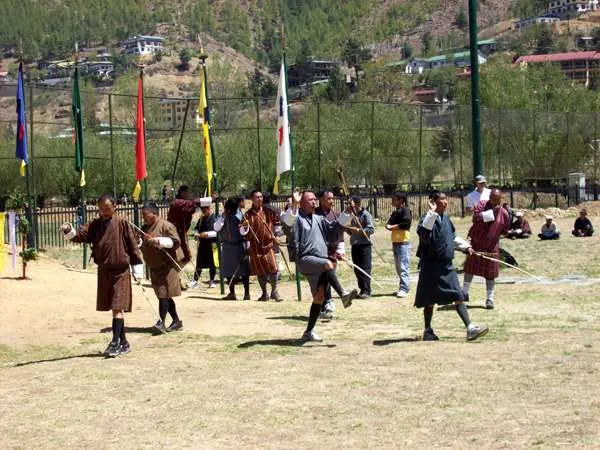
If your visit falls on a weekend and a match is underway, stop at Changlimithang Stadium or a nearby archery ground to watch Bhutanese archers compete in the country's national sport. Traditional archery competitions are lively social occasions, often accompanied by singing, dancing, and friendly rivalry.
Enjoy lunch at a local restaurant in Thimphu.
Afternoon — Bhutan's National Animal & Scenic Monastery Hike
Motithang Takin Preserve
After lunch, visit the Motithang Takin Preserve, a forested sanctuary dedicated to Bhutan's unusual national animal, the takin. This distinctive, stocky Himalayan mammal is associated with Bhutanese folklore and the legendary Buddhist saint Drukpa Kunley. Observe the animals and learn about their habitat and conservation.
Wangditse Goemba Hike to Dechen Phodrang
Continue with a rewarding nature and cultural excursion along the forested slopes above Thimphu. Begin near Sangaygang (BBS Tower) and follow the scenic trail toward Wangditse Goemba, a peaceful hillside monastery surrounded by pine forests and offering beautiful views across the Thimphu Valley.
After exploring the monastery, continue along the trail toward Dechen Phodrang, a historic monastic institution overlooking the northern part of the capital. The walk combines gentle forest scenery, occasional uphill and downhill sections, and opportunities to experience Bhutan's quieter spiritual landscape away from the busy city center.
The hike can be shortened or adjusted according to the group's fitness, trail conditions, and available time.
Tashichho Dzong — Bhutan's Seat of Government
In the late afternoon, visit Tashichho Dzong, an impressive fortress-monastery beside the Wang Chhu River. The dzong houses the throne room and offices of His Majesty the King, important government institutions, and the central monastic body during the summer months.
Admire its grand courtyards, intricately painted woodwork, and traditional Bhutanese architecture. Interior access is subject to official visiting hours and government functions.
Evening — Dinner & Relaxation in Thimphu
Return to your hotel after a rewarding day of cultural discoveries and scenic walking. Enjoy dinner and a relaxing evening in Bhutan's capital.
Day 2 Summary
- Maximum/Overnight Altitude: Approximately 2,600 m (8,530 ft) near the Wangditse hiking area; Thimphu — 2,320 m (7,610 ft)
- Driving Distance: Approximately 20–30 km (12–19 miles) for local sightseeing transfers
- Driving/Hiking Duration: Approximately 1–1.5 hours of cumulative driving; 2–3 hours of hiking, depending on the selected trail
- Key Activities: Buddha Dordenma, National Memorial Chorten, Simply Bhutan Museum, Centenary Farmers Market, optional archery viewing, Motithang Takin Preserve, Wangditse Goemba hike toward Dechen Phodrang, and Tashichho Dzong
- Activity Level: Moderate — cultural sightseeing, walking, and a forested monastery hike with some uneven terrain and elevation changes
- Meals Included: Breakfast, lunch, and dinner
- Overnight: Deluxe hotel in Thimphu
Note: Archery viewing depends on the local competition schedule, while Tashichho Dzong's interior visiting hours are subject to official restrictions. The hiking route and sightseeing sequence may be adjusted to suit weather, trail conditions, and the group's pace.
Day 3: Scenic Drive to Punakha via Dochula Pass, Botanical Garden & Cultural Landmarks
Today, your Bhutan and Nepal Tour continues from Thimphu to the beautiful subtropical valley of Punakha. Along the way, enjoy spectacular Himalayan panoramas from Dochula Pass, explore the rhododendron-rich forests of Lamperi Botanical Garden, and discover two of Bhutan's most celebrated cultural landmarks: Punakha Dzong and Chimi Lhakhang, the Temple of Fertility.
Read the full day
Morning — Dochula Pass & Lamperi Botanical Garden
After breakfast, depart Thimphu for a scenic drive toward Punakha, following winding mountain roads through forests of pine, oak, and rhododendron.
Dochula Pass — Panoramic Himalayan Views
Stop at Dochula Pass (3,100 m / 10,170 ft), one of Bhutan's most scenic mountain viewpoints. On clear days, admire sweeping views of the snowcapped eastern Himalayan peaks, including some of Bhutan's highest mountains.
The pass is also home to the 108 Druk Wangyal Chortens, a striking collection of memorial stupas set against the mountain backdrop. Take time to stroll among the chortens, enjoy the peaceful atmosphere, and capture photographs of the surrounding scenery.
Royal Botanical Park, Lamperi — Rhododendron Forests
Continue to the Royal Botanical Park at Lamperi, a protected natural area renowned for its diverse alpine and temperate vegetation, birdlife, and rhododendron forests.
During spring, particularly March through May, the park is especially beautiful as different species of rhododendrons bloom in shades of red, pink, white, and purple. Enjoy a leisurely nature walk along one of the park's accessible trails, appreciating the colorful blossoms when in season.
Outside the flowering season, the park remains an attractive stop for forest scenery and nature appreciation.
Descend into the warmer Punakha Valley and check in at Zhingkham Resort, overlooking the scenic valley and surrounding hillsides.
Afternoon — Punakha Dzong & Chimi Lhakhang Temple
Enjoy lunch before setting out to explore Punakha's remarkable cultural and spiritual heritage.
Punakha Dzong — Palace of Great Happiness
Visit the magnificent Punakha Dzong (Pungthang Dechen Phodrang Dzong), dramatically situated at the confluence of the Pho Chhu and Mo Chhu rivers.
Built in 1637 by Zhabdrung Ngawang Namgyal, this historic fortress-monastery served as Bhutan's former seat of government and remains one of the country's most important religious institutions.
Cross the traditional cantilever bridge and explore the dzong's impressive courtyards, richly decorated temples, intricate woodwork, and magnificent Bhutanese architecture. Learn about its central role in Bhutan's political and spiritual history.
Chimi Lhakhang — Temple of Fertility
Later, drive to the village of Sopsokha for a gentle countryside walk to Chimi Lhakhang, a 15th-century Buddhist temple associated with the revered and unconventional saint Drukpa Kunley, popularly known as the Divine Madman.
Follow a pleasant trail through traditional villages and terraced rice fields, enjoying views of the surrounding rural landscape. The temple is particularly famous for its fertility blessings and attracts both Bhutanese devotees and international visitors.
The walk generally takes 30–45 minutes each way, depending on the starting point and pace, with some uneven paths and gentle slopes.
Evening — Relaxation at Zhingkham Resort
Return to Zhingkham Resort in the late afternoon and enjoy some leisure time amid the peaceful surroundings of Punakha Valley.
Relax and take in the valley views before gathering for dinner at the resort. Overnight in Punakha.
Day 3 Summary
- Maximum Altitude: Dochula Pass — approximately 3,100 m (10,170 ft)
- Overnight Altitude: Punakha — approximately 1,250–1,350 m (4,100–4,430 ft)
- Driving Distance: Approximately 85–95 km (53–59 miles), including sightseeing transfers
- Driving Duration: Approximately 2.5–3.5 hours, excluding sightseeing stops
- Walking Duration: Approximately 1.5–2.5 hours combined, including botanical garden trails, dzong exploration, and Chimi Lhakhang walk
- Key Activities: Dochula Pass Himalayan panorama, 108 Druk Wangyal Chortens, Royal Botanical Park at Lamperi, Punakha Dzong, and Chimi Lhakhang Temple
- Activity Level: Easy to Moderate — scenic driving, cultural sightseeing, gentle nature walks, and countryside trails
- Meals Included: Breakfast, lunch, and dinner
- Overnight: Zhingkham Resort, Punakha
Note: Himalayan mountain views at Dochula Pass depend on weather and visibility. Rhododendron flowering at Lamperi is seasonal, generally occurring during spring. Sightseeing and walking arrangements may be adjusted according to local conditions and the group's pace.
Day 4: Explore Punakha Valley: Khamsum Yulley Namgyal Chorten, Hilltop Monasteries & Rinchengang Village
Today, your Bhutan and Nepal Tour takes you deeper into the cultural and natural beauty of Punakha and neighboring Wangdue Phodrang. Enjoy a scenic hike to the hilltop Khamsum Yulley Namgyal Chorten, visit peaceful Buddhist monasteries and a nunnery, and discover traditional Bhutanese village life. The day combines spiritual heritage, beautiful valley landscapes, and rewarding countryside walks.
Read the full day
Morning — Khamsum Yulley Namgyal Chorten & Hilltop Monasteries
Khamsum Yulley Namgyal Chorten — Scenic Riverside Hike
After breakfast, drive north through Punakha Valley to the trailhead near the village of Yebisa. Cross a suspension bridge over the Mo Chhu River and begin a scenic uphill hike through terraced rice fields and forested slopes to Khamsum Yulley Namgyal Chorten.
Commissioned by Bhutan's Queen Mother, Ashi Tshering Yangdon Wangchuck, this beautifully decorated four-story temple was built to promote peace, harmony, and protection from negative influences.
Explore its elaborate Buddhist artwork and enjoy panoramic views of the Mo Chhu Valley, surrounding mountains, and picturesque agricultural landscapes.
Allow approximately 1.5–2 hours for the round-trip hike, depending on walking pace and time spent at the temple. The uphill section includes steps and uneven paths.
Sangchhen Dorji Lhuendrup Nunnery
Continue to Sangchhen Dorji Lhuendrup Lhakhang, a striking hilltop temple and nunnery overlooking the Punakha and Wangdue valleys.
The complex is renowned for its traditional Bhutanese architecture, beautiful Buddhist statues, and serene surroundings. It also serves as a center for Buddhist education and traditional arts for resident nuns.
Enjoy sweeping views of the valleys below while learning about the important role of Buddhist nuns in Bhutanese religious and cultural life.
Dalay Goemba — A Peaceful Monastic Retreat
Visit Dalay Goemba, a lesser-visited Buddhist monastery in the Punakha region. Experience the peaceful atmosphere of this spiritual retreat, admire its traditional architecture, and appreciate the surrounding rural scenery.
The visit offers an opportunity to explore Bhutan's living Buddhist traditions away from the country's more frequently visited landmarks.
Afternoon — Wangdue Phodrang Dzong & Traditional Village Life
Enjoy lunch at a local restaurant before continuing your cultural exploration.
Wangdue Phodrang Dzong — Historic Fortress Above the River
Drive to Wangdue Phodrang Dzong, dramatically perched on a ridge overlooking the Punatsang Chhu River.
Originally founded in 1638 by Zhabdrung Ngawang Namgyal, this historic fortress was extensively reconstructed following a devastating fire in 2012. Today, it stands as an impressive example of Bhutanese architectural craftsmanship and cultural preservation.
Admire the dzong's commanding setting, traditional wooden structures, and intricately decorated courtyards while learning about its historical importance in western Bhutan.
Rinchengang Village — A Glimpse of Traditional Bhutan
Continue with a gentle walk to Rinchengang Village, one of the oldest traditional settlements in the Wangdue Phodrang area.
This charming hillside village is known for its closely clustered traditional houses, narrow stone pathways, and distinctive rural architecture. Wander through the settlement, observe everyday village life, and enjoy beautiful views of the surrounding valley and Wangdue Phodrang Dzong.
The walk provides a meaningful opportunity to experience Bhutanese village culture and traditional ways of life beyond the major tourist attractions.
Evening — Return to Zhingkham Resort
Return to Zhingkham Resort in Punakha for a relaxing evening. Enjoy the peaceful valley surroundings and reflect on a rewarding day of monastery visits, scenic hiking, and cultural encounters.
Dinner and overnight at the resort.
Day 4 Summary
- Maximum Altitude: Approximately 1,900–2,000 m (6,230–6,560 ft), depending on the monastery locations visited
- Overnight Altitude: Punakha — approximately 1,250–1,350 m (4,100–4,430 ft)
- Driving Distance: Approximately 50–70 km (31–43 miles), including local sightseeing transfers
- Driving Duration: Approximately 2–3 hours, excluding sightseeing stops
- Walking/Hiking Duration: Approximately 2–3 hours combined, including Khamsum Yulley Namgyal Chorten and Rinchengang Village
- Key Activities: Khamsum Yulley Namgyal Chorten hike, Sangchhen Dorji Lhuendrup Nunnery, Dalay Goemba, Wangdue Phodrang Dzong, and Rinchengang Village
- Activity Level: Moderate — uphill hiking, temple steps, uneven village pathways, and cultural sightseeing
- Meals Included: Breakfast, lunch, and dinner
- Overnight: Zhingkham Resort, Punakha
Note: The Khamsum Yulley Namgyal Chorten hike involves a sustained uphill climb and stone steps. Travelers who prefer less walking may enjoy alternative valley sightseeing arrangements. Monastery visits and the day's sequence are subject to local access and road conditions.
Day 5: Scenic Drive from Punakha to Paro via Dochula Pass & Dzongdrakha Monastery
Today, travel from the subtropical Punakha Valley back across the forested mountains of western Bhutan to Paro, retracing the scenic route through Dochula Pass and Thimphu. Along the way, enjoy another opportunity to admire the Himalayan panorama, stop for lunch in Bhutan's capital, and explore the remarkable cliffside Dzongdrakha Monastery before settling into your resort in Paro.
Read the full day
Morning — Punakha to Thimphu via Dochula Pass
After breakfast at Zhingkham Resort, depart Punakha and begin the winding ascent through lush valleys and forested hillsides toward Dochula Pass (3,100 m / 10,170 ft).
Dochula Pass — Another Chance for Himalayan Views
Stop briefly at Dochula Pass, where the 108 Druk Wangyal Chortens stand against a backdrop of forested ridges and distant Himalayan peaks.
If the weather is clear, enjoy sweeping views of Bhutan's snowcapped mountains. Since visibility can change considerably from day to day, this return visit offers another opportunity to appreciate the panorama if clouds obscured the mountains during your earlier crossing.
Continue downhill toward Thimphu, passing through beautiful pine and oak forests.
Lunch Stop in Thimphu
Arrive in Thimphu around midday and enjoy lunch at a local restaurant. After a relaxing break, continue toward Paro, following the scenic river valleys and traditional Bhutanese settlements along the way.
Afternoon — Dzongdrakha Monastery & Arrival in Paro
Dzongdrakha Monastery — Bhutan's Cliffside Spiritual Sanctuary
A short distance before reaching Paro, take a detour toward Dzongdrakha Monastery, a fascinating Buddhist temple complex dramatically situated against a rocky cliff overlooking the Bondey area of Paro Valley.
Sometimes described as a miniature counterpart to the famous Tiger's Nest Monastery, Dzongdrakha consists of several small temples built into the cliffside. The site is associated with Guru Rinpoche and holds considerable spiritual significance for local Bhutanese communities.
Enjoy a short walk along the hillside approach to the monastery, taking in views of the valley, surrounding villages, and terraced farmland. Explore the temple complex where access is permitted and appreciate its peaceful atmosphere and remarkable setting.
Unlike the more demanding hike to Tiger's Nest, the visit to Dzongdrakha generally involves a shorter walk, although the approach includes some slopes and uneven steps.
Check-in at Khangkhu Resort
Continue to Khangkhu Resort, situated on a hillside overlooking Paro Valley. Check into your accommodation and enjoy the tranquil surroundings, with views of traditional farmhouses, green fields, and distant mountain ridges.
Evening — Relaxation in Paro Valley
Spend the evening at leisure, enjoying the peaceful setting of Khangkhu Resort. Relax after the scenic journey and prepare for the next day's exploration of Paro's cultural and natural attractions.
Dinner and overnight at the resort.
Day 5 Summary
- Maximum Altitude: Dochula Pass — approximately 3,100 m (10,170 ft)
- Overnight Altitude: Paro — approximately 2,200–2,300 m (7,220–7,550 ft)
- Driving Distance: Approximately 125–145 km (78–90 miles), including the Dzongdrakha detour
- Driving Duration: Approximately 4–5 hours, excluding sightseeing and lunch stops
- Key Activities: Scenic drive through Dochula Pass, Himalayan viewpoints, lunch in Thimphu, Dzongdrakha Monastery visit, and arrival in Paro
- Activity Level: Easy — scenic driving, brief sightseeing stops, and a short monastery walk with some uneven steps
- Meals Included: Breakfast, lunch, and dinner
- Overnight: Khangkhu Resort, Paro
Note: Himalayan views from Dochula Pass depend on weather and visibility. Access to Dzongdrakha Monastery's inner temples may be restricted during religious ceremonies or other local events.
Day 6: Hike to Tiger's Nest Monastery & Relax in Paro Valley
Today is one of the most anticipated highlights of your Bhutan and Nepal Tour — the unforgettable hike to Tiger's Nest Monastery (Paro Taktsang), Bhutan's most iconic spiritual landmark. Perched dramatically on a sheer cliff approximately 900 m (2,950 ft) above Paro Valley, this sacred monastery offers a remarkable combination of Himalayan scenery, Buddhist heritage, and personal accomplishment.
Read the full day
After the hike, enjoy a relaxing afternoon in Paro, with the option of experiencing a traditional Bhutanese farmhouse and hot stone bath.
Morning — The Ultimate Tiger's Nest Monastery Hike
Paro Taktsang — Bhutan's Legendary Cliffside Monastery
After an early breakfast, drive to the Tiger's Nest trailhead and begin your hike along a well-established mountain path through beautiful pine and rhododendron forests, decorated with colorful Buddhist prayer flags.
The trail climbs steadily toward Taktsang Monastery (approximately 3,120 m / 10,240 ft), revealing increasingly spectacular views of the monastery clinging to the cliffs across the valley.
According to Bhutanese tradition, Guru Rinpoche (Padmasambhava) flew to this sacred site on the back of a tigress in the 8th century and meditated in a cave. The monastery, built around this revered site in 1692, remains one of Bhutan's most important pilgrimage destinations.
The Viewpoint, Cafeteria & Final Approach
Take a well-deserved rest at the Taktsang Cafeteria, located partway up the trail, before continuing toward the main viewpoint.
From here, enjoy breathtaking views of the monastery dramatically positioned against the cliff face. The final approach involves descending and ascending a series of stone steps across a narrow gorge, passing a waterfall before reaching the monastery entrance.
Explore the sacred temples and meditation chambers, where your guide will share stories of Guru Rinpoche and the spiritual significance of this extraordinary pilgrimage site.
After your visit, retrace the trail downhill to the starting point. Lunch may be enjoyed at the cafeteria during the hike or at a local restaurant afterward, depending on your pace and arrangements.
Hiking Information:
- Trailhead Altitude: Approximately 2,600 m (8,530 ft)
- Monastery Altitude: Approximately 3,120 m (10,240 ft)
- Elevation Gain: Approximately 520 m (1,710 ft)
- Round-trip Distance: Approximately 6–8 km (3.7–5 miles)
- Hiking Duration: Approximately 4–6 hours, including rest stops and the monastery visit
- Difficulty: Moderate to Challenging, with sustained uphill walking, uneven trails, and steep stone steps
Travelers who prefer a shorter walk may hike only to the cafeteria or main viewpoint. Pony rides may be available for part of the uphill route at additional cost, but they do not reach the monastery itself. The final section must be completed on foot.
Afternoon — Relaxation & Leisure in Paro
After returning from Tiger's Nest, enjoy a leisurely afternoon to recover from the hike.
You may return directly to Khangkhu Resort to relax, or take a gentle stroll through Paro town, browsing local handicraft shops, traditional textile stores, and small cafés.
The afternoon is intentionally kept flexible, allowing you to unwind and enjoy Paro at your own pace.
Optional Experience — Traditional Farmhouse Visit & Hot Stone Bath
For travelers interested in a deeper cultural experience, an optional visit to a traditional Bhutanese farmhouse can be arranged at an additional cost.
Meet a local family, learn about traditional rural lifestyles and household customs, and experience a Bhutanese hot stone bath (Dotsho).
This traditional bathing practice involves heating river stones over a wood fire and carefully placing them into a separate compartment of a wooden bathtub to warm the water. Local herbs may be added for their soothing fragrance.
The warm bath offers a relaxing way to unwind after the Tiger's Nest hike.
Optional farmhouse visit and hot stone bath are not included in the tour price and must be arranged separately.
Evening — Dinner & Overnight in Paro
Return to Khangkhu Resort for a relaxing evening. Enjoy dinner and reflect on the unforgettable experience of visiting one of the Himalayas' most extraordinary sacred sites.
Overnight at Khangkhu Resort.
Day 6 Summary
- Maximum Altitude: Tiger's Nest Monastery — approximately 3,120 m (10,240 ft)
- Overnight Altitude: Paro — approximately 2,200–2,300 m (7,220–7,550 ft)
- Driving Distance: Approximately 20–25 km (12–16 miles), including local transfers
- Hiking Distance: Approximately 6–8 km (3.7–5 miles) round trip
- Hiking Duration: Approximately 4–6 hours, including breaks and monastery exploration
- Key Activities: Guided Tiger's Nest Monastery hike, panoramic viewpoints, Buddhist temple exploration, and leisure time in Paro
- Optional Activities: Traditional farmhouse visit and Bhutanese hot stone bath (additional cost)
- Activity Level: Moderate to Challenging — sustained uphill hiking, uneven mountain trails, and steep stone stairways
- Meals Included: Breakfast, lunch, and dinner
- Overnight: Khangkhu Resort, Paro
Note: The Tiger's Nest hike requires reasonable physical fitness and involves steep sections, uneven terrain, and numerous steps. The hiking pace will be adjusted to the group's ability, with regular rest stops. Monastery access and optional activities are subject to local conditions and availability.
Day 7: Fly from Paro to Kathmandu & Explore Kathmandu's Cultural Heritage
Today marks the beginning of the second chapter of your Bhutan and Nepal Tour as you bid farewell to Bhutan and fly to Kathmandu, Nepal's vibrant capital. Enjoy a spectacular flight across the Himalayas, followed by an introduction to Kathmandu's ancient temples, royal squares, bustling bazaars, and living cultural traditions.
Read the full day
Namaste! Welcome to Kathmandu, Nepal!
The day concludes with a traditional Nepali welcome dinner accompanied by cultural performances.
Morning — Scenic Himalayan Flight from Paro to Kathmandu
After breakfast, transfer to Paro International Airport for your flight to Kathmandu.
Weather permitting, enjoy breathtaking aerial views of the Himalayan mountain range, including some of the world's highest snowcapped peaks. On exceptionally clear days, you may even catch a glimpse of Mount Everest, making this short international flight a memorable highlight of your journey.
Upon arrival at Tribhuvan International Airport in Kathmandu, complete immigration and customs formalities. Your local Nepali guide and driver will greet you at the airport and transfer you to Hotel Yak & Yeti, a heritage-inspired luxury hotel conveniently located in the heart of Kathmandu.
Check in, freshen up, and enjoy a short rest before beginning your cultural exploration.
Afternoon — Kathmandu's UNESCO Heritage & Traditional Bazaars
Swayambhunath Stupa — The Monkey Temple
Begin your Kathmandu sightseeing at Swayambhunath Stupa, one of Nepal's oldest and most revered Buddhist pilgrimage sites and part of the UNESCO-listed Kathmandu Valley World Heritage property.
Perched atop a hill overlooking the city, this sacred complex features a magnificent whitewashed stupa crowned with a gilded spire and the all-seeing eyes of Buddha.
Explore its colorful prayer flags, shrines, monasteries, and prayer wheels while enjoying panoramic views of the Kathmandu Valley. The site is also affectionately known as the Monkey Temple because of the resident monkeys inhabiting the surrounding wooded slopes.
For a less strenuous visit, your vehicle can approach the upper entrance, avoiding the long staircase from the eastern side.
Kathmandu Durbar Square — The Historic Royal Palace Complex
Continue to Kathmandu Durbar Square (Hanuman Dhoka), another UNESCO-listed cultural landmark and the historic center of Nepal's former royal capital.
Explore the atmospheric courtyards, intricately carved wooden temples, and traditional Newari architecture that reflect centuries of artistic and religious heritage.
Highlights include the Hanuman Dhoka Palace complex, Taleju Temple (exterior), and Kumari Ghar, the residence of Nepal's Living Goddess, Kumari. If circumstances permit, you may have an opportunity to glimpse the Living Goddess during one of her occasional appearances.
Your guide will introduce you to the history of the Malla kings, Nepal's royal traditions, and the remarkable coexistence of Hindu and Buddhist practices in Kathmandu Valley.
Heritage Walk through Indra Chowk & Ason Bazaar
From Kathmandu Durbar Square, continue on foot through the lively traditional trading neighborhoods of Indra Chowk and Ason, where Kathmandu's centuries-old commercial traditions remain very much alive.
Wander through narrow streets lined with spice merchants, textile shops, brassware vendors, traditional food stalls, and small neighborhood shrines.
At Indra Chowk, observe the colorful market atmosphere and traditional shops selling beads, fabrics, and religious items. Continue to Ason Bazaar, one of Kathmandu's busiest historic marketplaces, where locals gather to buy fresh produce, spices, household goods, and festival offerings.
This fascinating heritage walk offers an authentic glimpse into the everyday rhythms of Kathmandu beyond its famous monuments.
Return to your hotel for a short rest before the evening program.
Evening — Traditional Nepali Welcome Dinner & Cultural Performances
In the evening, enjoy a special Nepali welcome dinner accompanied by traditional cultural performances.
Savor a selection of authentic Nepali dishes while enjoying colorful folk dances and music representing Nepal's diverse ethnic communities and cultural traditions.
It is a wonderful introduction to Nepal's hospitality and a memorable way to celebrate the beginning of the Nepal portion of your journey.
After dinner, return to Hotel Yak & Yeti for a comfortable overnight stay.
Day 7 Summary
- Maximum/Overnight Altitude: Kathmandu — approximately 1,400 m (4,593 ft); Swayambhunath hilltop — approximately 1,450 m (4,757 ft), excluding flight altitude
- Flight Duration: Approximately 1–1.5 hours from Paro to Kathmandu
- Driving Duration: Approximately 1–1.5 hours of local transfers, depending on traffic
- Walking Duration: Approximately 1.5–2.5 hours of cultural sightseeing and heritage walks
- Key Activities: Scenic Himalayan flight, airport meet and greet, Swayambhunath Stupa, Kathmandu Durbar Square, Indra Chowk and Ason heritage walk, and Nepali welcome dinner with cultural performances
- Activity Level: Easy to Moderate — cultural sightseeing, city walking, cobblestone streets, and optional temple steps
- Meals Included: Breakfast and Nepali welcome dinner
- Overnight: Hotel Yak & Yeti, Kathmandu
Note: The sightseeing program depends on the international flight schedule, immigration processing, and Kathmandu traffic conditions. Himalayan mountain views during the flight are weather-dependent. If the flight arrives late, the afternoon sightseeing program may need to be shortened or rearranged.
Day 8: Explore Kathmandu Valley's UNESCO Heritage: Boudhanath, Changu Narayan, Bhaktapur & Pashupatinath
Today, discover the extraordinary cultural and spiritual heritage of Kathmandu Valley, home to some of Nepal's most treasured UNESCO World Heritage Sites.
Read the full day
From the magnificent Buddhist stupa of Boudhanath and the ancient Hindu temple of Changu Narayan to Bhaktapur's medieval architecture and the sacred riverside shrines of Pashupatinath, this full-day excursion reveals Nepal's rich religious traditions, artistic achievements, and living cultural heritage.
Morning — Boudhanath Stupa & Changu Narayan Temple
Boudhanath Stupa — Center of Tibetan Buddhism in Nepal
After breakfast at Hotel Yak & Yeti, begin your sightseeing at Boudhanath Stupa, one of the largest Buddhist stupas in Nepal and a major pilgrimage center for Tibetan Buddhists.
The enormous whitewashed dome, crowned by a gilded spire bearing the all-seeing eyes of Buddha, dominates a circular plaza surrounded by monasteries, traditional shops, and rooftop cafés.
Join the flow of pilgrims walking clockwise around the stupa, observe devotees spinning prayer wheels, and experience the peaceful atmosphere created by fluttering prayer flags and Buddhist chants.
Your guide will explain the stupa's religious significance and the vibrant Tibetan Buddhist community that has developed around this sacred site.
Changu Narayan Temple — Ancient Hindu Heritage
Continue toward Changu Narayan Temple, perched on a wooded hill overlooking the eastern Kathmandu Valley.
Dedicated to Lord Vishnu, Changu Narayan is among Nepal's oldest surviving Hindu temple sites and is particularly renowned for its remarkable stone sculptures, intricate woodcarvings, and historical inscriptions dating back to the Licchavi period.
Explore the traditional temple courtyard, admire the finely crafted images of Hindu deities, and learn about the architectural and religious traditions that have flourished here for centuries.
The surrounding Newari village, with its traditional brick houses and narrow lanes, adds to the site's cultural charm.
Afternoon — Bhaktapur Durbar Square & Pashupatinath Temple
Bhaktapur — Nepal's Medieval City of Art & Architecture
Continue to Bhaktapur, one of the Kathmandu Valley's best-preserved historic cities and a remarkable showcase of traditional Newari architecture, craftsmanship, and urban culture.
Explore Bhaktapur Durbar Square, the historic royal center of the former Malla kingdom, where magnificent temples, palace courtyards, and intricately carved wooden buildings reflect the city's artistic heritage.
Highlights include:
- 55-Window Palace: An outstanding example of traditional Newari woodcarving and royal architecture.
- Golden Gate: A beautifully ornamented entrance to the historic palace complex.
- Nyatapola Temple: An impressive five-tiered pagoda dedicated to Siddhi Lakshmi, standing prominently in Taumadhi Square.
- Pottery Square: A traditional neighborhood where local artisans continue the centuries-old craft of pottery making.
Stroll through Bhaktapur's brick-paved lanes, observe traditional crafts, and experience the city's distinctive cultural atmosphere.
Enjoy time for lunch at a restaurant of your choice. Lunch is not included in the tour price.
Pashupatinath Temple — Nepal's Sacred Hindu Pilgrimage Site
Later in the afternoon, return toward Kathmandu and visit Pashupatinath Temple, one of the most sacred Hindu pilgrimage sites dedicated to Lord Shiva.
Situated along the banks of the Bagmati River, this extensive temple complex is an important center of Hindu worship, spiritual rituals, and cremation ceremonies.
Although the main temple's inner sanctuary is accessible only to Hindus, visitors can explore designated areas of the surrounding complex, observe the distinctive pagoda-style architecture, and learn about Hindu religious practices and beliefs concerning life, death, and reincarnation.
From the opposite bank of the Bagmati River, you may respectfully observe traditional cremation rituals taking place at the riverside ghats.
Your guide will explain the spiritual significance of Pashupatinath and the cultural traditions associated with this revered pilgrimage site.
Evening — Return to Hotel Yak & Yeti
After a rewarding day exploring Kathmandu Valley's remarkable heritage, return to Hotel Yak & Yeti for a relaxing evening.
Dinner is at your own arrangement, allowing you to explore Kathmandu's diverse dining options or enjoy a meal at the hotel.
Overnight at Hotel Yak & Yeti.
Day 8 Summary
- Maximum Altitude: Changu Narayan — approximately 1,540 m (5,050 ft)
- Overnight Altitude: Kathmandu — approximately 1,400 m (4,593 ft)
- Driving Distance: Approximately 45–55 km (28–34 miles), including sightseeing transfers
- Driving Duration: Approximately 2.5–3.5 hours, depending on traffic
- Walking Duration: Approximately 2–3 hours of cultural sightseeing and heritage walks
- Key Activities: Boudhanath Stupa, Changu Narayan Temple, Bhaktapur Durbar Square, Pottery Square, and Pashupatinath Temple
- Activity Level: Easy to Moderate — walking through temple courtyards, cobblestone streets, and historic squares with occasional steps and uneven surfaces
- Meals Included: Breakfast only; lunch and dinner are on your own
- Overnight: Hotel Yak & Yeti, Kathmandu
Note: This is a full-day cultural excursion involving multiple UNESCO World Heritage Sites. The sightseeing sequence and duration may be adjusted according to traffic, local religious ceremonies, and site access. Visitors should dress modestly and respect photography restrictions, particularly at Pashupatinath's cremation ghats.
Day 9: Scenic Drive from Kathmandu to Chitwan via Manakamana Temple & Tharu Cultural Experience
Today, your Bhutan and Nepal Tour continues from the historic Kathmandu Valley to the subtropical lowlands of Chitwan National Park, one of Nepal's premier wildlife destinations. Along the way, enjoy a scenic drive through river valleys and terraced hillsides, take a cable car ride to the sacred Manakamana Temple, and experience the rich cultural traditions of the indigenous Tharu community.
Read the full day
The journey introduces a fascinating change of landscape, from the Himalayan foothills to the tropical forests and grasslands of southern Nepal.
Morning — Scenic Drive Along the Trishuli River & Manakamana Temple
After an early breakfast at Hotel Yak & Yeti, depart Kathmandu in your private vehicle and travel westward toward Kurintar, following the winding highway through Nepal's scenic middle hills.
Kathmandu to Kurintar — Rivers, Hills & Rural Landscapes
As you leave the Kathmandu Valley, enjoy views of terraced farmlands, hillside settlements, and forested ridges. The road eventually follows the Trishuli River, where stretches of whitewater flow through dramatic gorges and fertile valleys.
Along the way, observe everyday rural life, roadside villages, and the changing landscapes of central Nepal.
Manakamana Temple — Cable Car Ride & Sacred Hilltop Shrine
At Kurintar, board the Manakamana Cable Car for a spectacular ascent to the hilltop settlement of Manakamana, approximately 1,300 m (4,265 ft) above sea level.
The cable car ride takes approximately 10 minutes each way, offering sweeping views of the Trishuli River valley, forested hillsides, and surrounding countryside.
Visit Manakamana Temple, a revered Hindu pilgrimage site dedicated to Goddess Bhagwati, believed by devotees to fulfill the wishes of those who worship her.
Explore the lively temple surroundings, observe pilgrims presenting offerings, and learn about the religious traditions associated with this sacred shrine. Access to the temple's inner sanctum may be restricted according to religious customs.
After your visit, descend by cable car and continue your journey toward Chitwan.
Afternoon — Journey to Chitwan National Park & Resort Check-In
Scenic Drive to Nepal's Subtropical Terai
Continue south toward Chitwan, leaving the steep river valleys and forested foothills behind as the landscape gradually opens into the warmer plains of Nepal's Terai region.
The scenery changes noticeably, with agricultural fields, small settlements, and tropical vegetation replacing the mountain landscapes of the previous days.
Arrival at Jungle Villa Resort
Arrive at Jungle Villa Resort, located in the Chitwan area near the national park, and check into your accommodation.
Enjoy lunch at the resort and take some time to relax amid the peaceful natural surroundings before beginning your afternoon cultural activities.
Tharu Village Walk — Discover Indigenous Traditions
Later in the afternoon, join a guided walk through a nearby Tharu village to learn about the traditions and everyday life of one of Nepal's indigenous communities.
Observe traditional village architecture, agricultural practices, and local customs while gaining insight into the Tharu people's long-standing relationship with the forests, rivers, and agricultural landscapes of the Terai.
Your local guide will introduce the community's cultural heritage and explain how traditional livelihoods continue to evolve alongside conservation and tourism.
Evening — Traditional Tharu Cultural Performance
Enjoy a lively Tharu cultural program, featuring traditional music, colorful costumes, and energetic stick dances performed by local artists.
The rhythmic performances offer an entertaining introduction to the cultural identity, celebrations, and storytelling traditions of the Tharu community.
After the performance, return to Jungle Villa Resort for dinner and a relaxing evening in the peaceful surroundings of Chitwan.
Day 9 Summary
- Maximum/Overnight Altitude: Kathmandu — approximately 1,400 m (4,593 ft); Chitwan — approximately 150–200 m (490–656 ft)
- Driving Distance: Approximately 185–200 km (115–124 miles), depending on the resort access route
- Driving Duration: Approximately 5–7 hours, excluding Manakamana Temple sightseeing and other stops; longer during roadworks or heavy traffic
- Cable Car Ride: Approximately 10 minutes each way, excluding waiting time
- Key Activities: Scenic Trishuli River drive, Manakamana Cable Car and temple visit, journey to Chitwan, guided Tharu village walk, and traditional Tharu cultural performance
- Activity Level: Easy to Moderate — extended scenic driving, cable car ride, temple exploration, and gentle village walking
- Meals Included: Breakfast, lunch, and dinner
- Overnight: Jungle Villa Resort, Chitwan
Note: Travel times between Kathmandu and Chitwan can vary significantly due to highway conditions, road construction, and traffic. The Manakamana Cable Car may experience queues or temporary service interruptions. Afternoon cultural activities are subject to arrival time and local arrangements.
Day 10: Chitwan National Park Wildlife Safari, Rapti River Canoeing & Gharial Conservation Center
Today is dedicated to discovering the extraordinary biodiversity of Chitwan National Park, Nepal's first national park and a UNESCO World Heritage Site. From a peaceful dugout canoe ride along the Rapti River to an exciting 4WD jungle safari through subtropical forests and grasslands, experience one of the most rewarding wildlife adventures of your Bhutan and Nepal Tour.
Read the full day
Accompanied by experienced local naturalists, explore the habitats of endangered rhinoceroses, crocodiles, numerous bird species, and the elusive Bengal tiger.
Morning — Rapti River Canoe Ride & Wildlife Watching
Traditional Dugout Canoe Safari
After breakfast at Jungle Villa Resort, begin your wildlife exploration with a guided dugout canoe ride along the Rapti River, one of the waterways bordering Chitwan National Park.
Glide quietly downstream in a traditional wooden canoe, accompanied by an experienced boatman and local nature guide. The slow-moving journey provides excellent opportunities to observe wildlife along the riverbanks without disturbing their natural behavior.
Watch for mugger crocodiles resting along the banks and the critically endangered gharial, a distinctive fish-eating crocodilian recognized by its long, narrow snout.
The river corridor is also rich in birdlife. Depending on the season, you may encounter kingfishers, egrets, herons, storks, cormorants, and other resident or migratory waterbirds.
Your naturalist guide will help identify wildlife and explain the importance of Chitwan's river ecosystems in supporting the region's remarkable biodiversity.
After the canoe excursion, return to the resort for some leisure time.
Afternoon — 4WD Jungle Safari & Gharial Conservation Center
Lunch & Midday Relaxation
Enjoy lunch at Jungle Villa Resort and take a short break before your afternoon wildlife adventure.
Chitwan National Park — 4WD Jeep Safari
Set out on an exciting 4WD Jeep safari in Chitwan National Park, accompanied by an experienced naturalist guide and safari driver.
Travel along designated park tracks through a mosaic of tall elephant grasslands, riverine forests, wetlands, and towering sal woodlands. These diverse habitats support an impressive variety of mammals, reptiles, and bird species.
Wildlife you may encounter includes:
- Greater One-Horned Rhinoceros: One of Chitwan's most celebrated conservation successes, frequently observed grazing in grasslands or near wetlands.
- Royal Bengal Tiger: An elusive apex predator whose sightings are rare and depend on luck, season, and wildlife movements.
- Sloth Bear: A distinctive forest-dwelling mammal occasionally seen foraging near open woodland.
- Spotted Deer & Sambar Deer: Common herbivores that inhabit the park's forests and grasslands.
- Wild Boar & Other Wildlife: Including monkeys, peafowl, and numerous resident and migratory bird species.
Your guide will explain animal behavior, identify tracks and signs, and share insights into Chitwan's conservation programs and fragile ecosystems.
The safari generally lasts 3–4 hours, depending on the designated route, wildlife activity, and park regulations.
Gharial Crocodile Conservation Center
If the safari route and park access permit, visit the Gharial Conservation Breeding Center at Kasara, an important facility dedicated to protecting the critically endangered gharial.
Learn about conservation breeding, habitat protection, and efforts to restore gharial populations in Nepal's river systems.
Observe these remarkable reptiles in a controlled conservation setting and gain a deeper appreciation of the challenges involved in protecting endangered freshwater wildlife.
The conservation center visit is subject to its opening hours, park regulations, and the day's safari arrangements.
Evening — Relaxation at Jungle Villa Resort
Return to Jungle Villa Resort after an exciting day of wildlife encounters.
Enjoy a relaxing evening surrounded by the peaceful atmosphere of Chitwan's subtropical landscape. Share stories of the day's wildlife sightings over dinner and unwind at the resort.
Day 10 Summary
- Maximum/Overnight Altitude: Chitwan — approximately 150–200 m (490–656 ft)
- Safari Distance: Varies according to the designated park route and wildlife viewing conditions
- Canoe Duration: Approximately 1–2 hours, depending on river conditions and arrangements
- Jeep Safari Duration: Approximately 3–4 hours, including wildlife observation stops
- Key Activities: Rapti River dugout canoe ride, crocodile and birdwatching, guided 4WD jungle safari, and Gharial Conservation Breeding Center visit, subject to access
- Activity Level: Easy to Moderate — seated canoeing, potentially bumpy safari drives, and limited walking
- Meals Included: Breakfast, lunch, and dinner
- Overnight: Jungle Villa Resort, Chitwan
Note: Wildlife sightings are unpredictable and cannot be guaranteed. Canoe excursions, Jeep safaris, and conservation center visits depend on weather, river levels, seasonal park regulations, and local operating conditions. The program may be adjusted for safety or conservation requirements.
Day 11: Scenic Drive from Chitwan to Bandipur via Historic Gorkha Palace
Today, leave the subtropical lowlands of Chitwan and travel into Nepal's scenic middle hills, visiting the historic Gorkha Palace, the ancestral seat of the Shah dynasty and birthplace of King Prithvi Narayan Shah, who initiated the unification of modern Nepal. Continue to Bandipur, a beautifully preserved hilltop town known for its traditional Newari architecture, cobblestone streets, and sweeping Himalayan views.
Read the full day
Morning — Scenic Drive from Chitwan to Gorkha
After an early breakfast at Jungle Villa Resort, depart Chitwan and travel north toward Gorkha, passing through fertile river valleys, terraced farmlands, traditional villages, and forested hillsides.
Gorkha Palace — Birthplace of Modern Nepal
Visit Gorkha Durbar (Gorkha Palace), a historic hilltop palace and temple complex overlooking the surrounding valleys.
Gorkha is the birthplace of King Prithvi Narayan Shah, whose military campaigns in the 18th century laid the foundation for modern Nepal. The palace served as the ancestral seat of the Shah dynasty and remains an important symbol of Nepal's royal history.
Explore the complex's traditional architecture, intricately carved wooden structures, historic courtyards, and sacred shrines, including the revered Gorakhnath Temple and Gorkha Kalika Temple.
With improved road access, vehicles can now reach the parking area near the palace, leaving visitors with about 200 ft walking to the complex. You can still opt for the traditional uphill staircase approach, which takes about 45 minutes to 1 hour depending on your fitness level.
On clear days, enjoy panoramic views of the surrounding hills and distant Himalayan peaks.
Afternoon — Scenic Drive to Bandipur & Historic Town Exploration
After exploring Gorkha Palace, enjoy lunch at a local restaurant at your own expense before continuing toward Bandipur, a picturesque hilltop settlement situated above the Prithvi Highway.
Bandipur — A Living Museum of Newari Heritage
Arrive in Bandipur and check into your hotel. After some time to refresh, set out on a leisurely guided walk through the town's beautifully preserved historic center.
Once an important trading post along the historic India–Tibet trade routes, Bandipur retains much of its traditional Newari character, with elegant brick houses, intricately carved wooden windows, old merchant residences, and stone-paved pedestrian streets.
Explore Bandipur Bazaar, the town's atmospheric main street, where traditional architecture blends with small cafés, local shops, and everyday village life.
The relaxed pace offers opportunities to observe local customs, photograph historic buildings, and appreciate the distinctive cultural heritage of Nepal's middle hills.
Himalayan Panoramas from Bandipur
Weather permitting, enjoy spectacular views of the Himalayan mountain range, including sections of the Annapurna, Manaslu, and Ganesh Himal ranges.
Bandipur's elevated location provides a beautiful setting for enjoying the changing afternoon light over the surrounding hills and valleys.
Evening — Leisurely Evening in Bandipur
Spend a relaxing evening exploring Bandipur's peaceful pedestrian streets or enjoying the atmosphere of the historic town square.
You may relax at a local café, browse traditional shops, or simply enjoy the mountain-town ambiance.
Dinner is at your own arrangement, allowing you to sample local Nepali dishes or dine at your hotel.
Overnight in Bandipur.
Day 11 Summary
- Maximum/Overnight Altitude: Bandipur — approximately 1,030 m (3,380 ft); Gorkha Palace — approximately 1,300 m (4,265 ft)
- Driving Distance: Approximately 150–190 km (93–118 miles), depending on the route
- Driving Duration: Approximately 5–7 hours, excluding sightseeing and meal stops
- Key Activities: Scenic countryside drive, Gorkha Palace and temples, historic Bandipur Bazaar, traditional Newari architecture, and Himalayan viewpoints
- Activity Level: Easy — scenic driving, short walks around Gorkha Palace, and leisurely exploration of Bandipur's historic streets
- Meals Included: Breakfast only; lunch and dinner are on your own
- Overnight: Hotel Old Inn or similar
Day 12: Scenic Drive from Bandipur to Pokhara, Phewa Lake Boating & World Peace Pagoda
Today, your Bhutan and Nepal Tour continues to Pokhara, Nepal's picturesque lakeside city nestled beneath the majestic Annapurna Himalayas. Enjoy a scenic drive through the lush middle hills before discovering the tranquil beauty of Phewa Lake, visiting the sacred Tal Barahi Temple, and admiring sweeping views of Pokhara Valley from the hilltop World Peace Pagoda (Shanti Stupa).
Read the full day
Morning — Scenic Drive from Bandipur to Pokhara
After an early breakfast at your hotel in Bandipur, depart for Pokhara, following the scenic highway through Nepal's beautiful middle hills.
The journey passes terraced farmlands, traditional villages, forested slopes, and river valleys, offering glimpses of everyday rural life. On clear days, distant Himalayan peaks may appear above the surrounding hills.
Arrival at Fishtail Lodge
Upon arrival in Pokhara (approximately 820 m / 2,690 ft), transfer to Fishtail Lodge, a peaceful lakeside retreat surrounded by lush gardens and overlooking Phewa Lake.
Check into your accommodation, subject to room availability, and take some time to refresh before beginning your sightseeing.
Phewa Lake Boating & Tal Barahi Temple
Enjoy a relaxing boat ride across Phewa Lake, Pokhara's most famous natural attraction, framed by green hills and distant Himalayan peaks.
On clear, calm days, the lake's waters reflect the distinctive summit of Machhapuchhre (Fishtail Mountain) and parts of the Annapurna range, creating one of Pokhara's most memorable landscapes.
Stop at Tal Barahi Temple, a sacred two-story pagoda situated on a small island in the lake. Dedicated to Goddess Barahi, an incarnation of Goddess Durga, the temple is an important place of worship for local Hindu devotees.
Explore the small temple complex, observe pilgrims offering prayers, and enjoy the peaceful surroundings before returning by boat to the lakeshore.
Enjoy lunch at a lakeside restaurant of your choice. Lunch is not included in the tour price.
Afternoon — World Peace Pagoda & Panoramic Pokhara Valley Views
Shanti Stupa — World Peace Pagoda
In the afternoon, travel to the hilltop World Peace Pagoda (Shanti Stupa), a beautiful white Buddhist monument overlooking Phewa Lake and Pokhara Valley.
Built as a symbol of world peace and harmony, the pagoda is one of Pokhara's most celebrated viewpoints.
From its elevated setting, enjoy sweeping panoramic views of Phewa Lake, Pokhara city, and the surrounding green hills. On clear days, the snowcapped Annapurna range, including Machhapuchhre, provides a spectacular Himalayan backdrop.
Your guide will explain the significance of the pagoda and its connection to the international Buddhist peace movement.
The viewpoint is accessible by road, followed by a relatively short uphill walk with steps, making it a convenient alternative to the longer hiking routes from the lakeshore.
Take time to appreciate the peaceful atmosphere, admire the surrounding scenery, and capture photographs before returning to Pokhara.
Evening — Relaxation at Fishtail Lodge
Return to Fishtail Lodge for a relaxing evening beside Phewa Lake.
You may spend some leisure time enjoying the resort's tranquil gardens or exploring the lively Lakeside neighborhood, known for its cafés, handicraft shops, and restaurants.
Dinner is at your own arrangement, offering the flexibility to explore Pokhara's varied dining options.
Overnight at Fishtail Lodge.
Day 12 Summary
- Maximum Altitude: World Peace Pagoda — approximately 1,100 m (3,610 ft)
- Overnight Altitude: Pokhara — approximately 820 m (2,690 ft)
- Driving Distance: Approximately 85–100 km (53–62 miles), including local sightseeing transfers
- Driving Duration: Approximately 2.5–3.5 hours, excluding sightseeing stops
- Boating Duration: Approximately 45–60 minutes, including the Tal Barahi Temple visit
- Key Activities: Scenic Bandipur–Pokhara drive, Phewa Lake boating, Tal Barahi Temple, World Peace Pagoda, and panoramic Himalayan viewpoints
- Activity Level: Easy — scenic driving, leisurely boating, and short walks with some uphill steps at the pagoda
- Meals Included: Breakfast only; lunch and dinner are on your own
- Overnight: Fishtail Lodge, Pokhara
Note: Himalayan mountain views depend on weather and visibility. Boating on Phewa Lake is subject to weather and lake conditions, while access to the World Peace Pagoda involves a short uphill walk and steps. Hotel check-in is subject to room availability upon arrival.
Day 13: Sarangkot Himalayan Sunrise, Bindhyabasini Temple & Pokhara Cultural Exploration
Begin your day with a spectacular Himalayan sunrise from Sarangkot, watching the first golden rays illuminate the snowcapped Annapurna range. Visit the sacred Bindhyabasini Temple before returning to your hotel for a leisurely late breakfast. In the afternoon, explore Pokhara's natural wonders, discover the fascinating history of Himalayan mountaineering, and experience the living traditions of a local Tibetan community.
Read the full day
Early Morning — Sarangkot Sunrise & Bindhyabasini Temple
Sarangkot — Sunrise over the Annapurna Himalayas
Depart Fishtail Lodge before dawn and drive to Sarangkot (approximately 1,600 m / 5,250 ft), one of Nepal's most celebrated Himalayan viewpoints.
As daylight breaks, watch the magnificent peaks of the Annapurna Massif, Machhapuchhre (Fishtail Mountain), Dhaulagiri, and distant Manaslu gradually emerge in shades of gold and pink. On clear mornings, the sweeping mountain panorama offers outstanding photography opportunities and an unforgettable Himalayan experience.
The viewpoint is accessible by road, followed by a short walk to the observation area, making it suitable for most travelers.
Bindhyabasini Temple — Pokhara's Sacred Hindu Shrine
On your return journey, stop at Bindhyabasini Temple, one of Pokhara's oldest and most revered Hindu pilgrimage sites.
Dedicated to Goddess Bhagwati, a manifestation of Goddess Durga, this hilltop temple overlooks Pokhara's historic old town and surrounding valley.
Observe devotees offering prayers, lighting oil lamps, and performing traditional rituals while your guide explains the temple's religious significance and its important place in local spiritual life.
Return to Fishtail Lodge for a relaxed late breakfast and some leisure time before the afternoon excursion.
Afternoon — Pokhara's Natural Wonders, Mountain Heritage & Tibetan Culture
Davis Falls — A Unique Underground Waterfall
Begin your afternoon sightseeing at Davis Falls (Patale Chhango), one of Pokhara's distinctive natural attractions.
Here, water flowing from Phewa Lake plunges into a narrow rocky gorge before disappearing into an underground passage. The waterfall is particularly impressive during and shortly after the monsoon season, when water levels are higher.
Enjoy views from designated observation platforms and learn about the area's fascinating geological formations.
Gupteshwor Mahadev Cave — Sacred Underground Shrine (Optional)
Located opposite Davis Falls, Gupteshwor Mahadev Cave is a limestone cavern containing a sacred shrine dedicated to Lord Shiva.
The cave features natural rock formations and a passage leading toward an underground viewpoint of the waterfall's flow.
Visitors interested in exploring the cave may descend the stairways to the shrine and lower chambers.
This visit is optional, as the cave involves numerous steep steps, damp surfaces, and potentially slippery passages. Travelers who prefer less strenuous activities may skip the cave.
International Mountain Museum — Himalayan Exploration & Mountaineering Heritage
Continue to the International Mountain Museum, an engaging attraction dedicated to the Himalayas, the history of mountaineering, and the diverse cultures of Nepal's mountain communities.
Explore fascinating exhibits featuring the world's highest peaks, pioneering Himalayan expeditions, traditional climbing equipment, and the achievements of legendary mountaineers.
The museum also showcases the lifestyles, traditions, and environmental challenges of Himalayan communities, providing valuable insights into the mountains and cultures encountered throughout your Bhutan and Nepal Tour.
Tashi Ling Tibetan Settlement — Tibetan Culture & Traditional Handicrafts
Visit Tashi Ling Tibetan Refugee Settlement, a long-established Tibetan community located near the International Mountain Museum.
Established following the Tibetan migration to Nepal in the late 1950s and early 1960s, the settlement offers insight into the community's efforts to preserve its cultural identity, Buddhist traditions, and traditional craftsmanship.
Explore the settlement with your guide and discover local handicraft workshops and shops featuring handwoven Tibetan carpets, traditional jewelry, and other handmade products.
Depending on local arrangements, you may have opportunities to interact with community members and learn about their everyday lives, cultural heritage, and the importance of preserving Tibetan traditions across generations.
The visit adds a meaningful cultural dimension to your journey, highlighting the diverse Himalayan communities that have contributed to Nepal's rich cultural landscape.
Evening — Leisurely Evening in Pokhara
Return to Fishtail Lodge and enjoy the remainder of the day at leisure.
Relax in the resort's peaceful gardens, take a gentle stroll along Phewa Lakeside, or explore the neighborhood's cafés, restaurants, and handicraft shops.
Dinner is at your own arrangement, allowing you to enjoy Pokhara's diverse selection of Nepali and international cuisine.
Overnight at Fishtail Lodge.
Day 13 Summary
- Maximum Altitude: Sarangkot — approximately 1,600 m (5,250 ft)
- Overnight Altitude: Pokhara — approximately 820 m (2,690 ft)
- Driving Distance: Approximately 40–50 km (25–31 miles), including sightseeing transfers
- Driving Duration: Approximately 2–3 hours combined, excluding sightseeing stops
- Walking Duration: Approximately 1.5–2.5 hours of sightseeing, with additional steps for the optional cave visit
- Key Activities: Sarangkot Himalayan sunrise, Bindhyabasini Temple, Davis Falls, International Mountain Museum, Tashi Ling Tibetan Settlement, and optional Gupteshwor Mahadev Cave
- Activity Level: Easy — short walks and cultural sightseeing; optional cave exploration involves steep steps and uneven surfaces
- Meals Included: Breakfast only; lunch and dinner are on your own
- Overnight: Fishtail Lodge, Pokhara
Note: Himalayan sunrise views depend on weather and visibility. Early morning departure times vary seasonally. The afternoon sightseeing sequence may be adjusted according to museum opening hours, community access, and the group's pace. The optional Gupteshwor Mahadev Cave visit may not be suitable for travelers with limited mobility.
Day 14: Fly from Pokhara to Kathmandu & Explore Historic Patan Durbar Square
Today, bid farewell to the beautiful lakeside city of Pokhara and return to Kathmandu on a short scenic flight. Upon arrival, explore the magnificent temples, royal courtyards, and artistic heritage of Patan Durbar Square, one of the Kathmandu Valley's UNESCO World Heritage Sites.
Read the full day
The afternoon offers time to relax at Hotel Yak & Yeti as your memorable Bhutan and Nepal Tour approaches its conclusion.
Morning — Scenic Flight from Pokhara to Kathmandu
After breakfast at Fishtail Lodge, transfer to Pokhara International Airport for your domestic flight to Kathmandu.
The approximately 25-minute flight offers beautiful aerial views of Nepal's rolling hills, river valleys, and terraced landscapes. On clear days, enjoy glimpses of the snowcapped Himalayan peaks rising above the countryside.
Upon arrival at Tribhuvan International Airport, meet your local guide and driver, who will welcome you and accompany you on your final cultural sightseeing excursion in Kathmandu Valley.
Patan Durbar Square — The City of Fine Arts
Drive to Patan (Lalitpur), one of Nepal's oldest cities and a celebrated center of traditional Newari art, architecture, and craftsmanship.
Explore Patan Durbar Square, a UNESCO-listed royal palace complex renowned for its magnificent temples, intricately carved wooden buildings, and beautifully preserved courtyards.
Highlights include:
- Krishna Mandir: An elegant 17th-century stone temple dedicated to Lord Krishna, celebrated for its intricate carvings and distinctive Shikhara-style architecture.
- Patan Royal Palace: A historic palace complex featuring richly decorated courtyards, traditional Newari architecture, and exquisite craftsmanship.
- Golden Temple (Hiranya Varna Mahavihar): A beautiful Buddhist monastery known for its gilded metalwork, elaborate carvings, and sacred religious traditions.
- Patan Museum: Housed within the restored royal palace complex, this outstanding museum showcases traditional Hindu and Buddhist art, bronze sculptures, and the remarkable artistic heritage of Kathmandu Valley.
Stroll through the surrounding historic lanes, where traditional metalworkers, woodcarvers, and artisans continue centuries-old crafts.
Your guide will introduce you to Patan's rich cultural history and the harmonious coexistence of Hindu and Buddhist traditions that characterize the city.
Afternoon — Check-in at Hotel Yak & Yeti
After exploring Patan, transfer to Hotel Yak & Yeti, a heritage-inspired luxury hotel conveniently located in central Kathmandu.
Check into your accommodation and enjoy the remainder of the afternoon at leisure.
You may relax at the hotel, explore nearby shops and cafés, or spend time browsing Kathmandu's handicraft stores for souvenirs and gifts.
Lunch is at your own arrangement, allowing you to dine in Patan or Kathmandu according to your preference.
Evening — Leisure Time in Kathmandu
Enjoy your final evening in Kathmandu at your own pace.
You may relax at the hotel, take a leisurely walk through the nearby shopping districts, or enjoy dinner at one of Kathmandu's many Nepali or international restaurants.
Dinner is at your own arrangement.
Overnight at Hotel Yak & Yeti.
Day 14 Summary
- Maximum/Overnight Altitude: Kathmandu — approximately 1,400 m (4,593 ft)
- Flight Duration: Approximately 25–30 minutes from Pokhara to Kathmandu
- Driving Duration: Approximately 1–2 hours of local transfers, depending on traffic
- Walking Duration: Approximately 1–2 hours of cultural sightseeing
- Key Activities: Scenic Pokhara–Kathmandu flight, Patan Durbar Square, Krishna Mandir, Patan Royal Palace, Golden Temple, and Patan Museum
- Activity Level: Easy — short domestic flight, cultural sightseeing, and leisurely walking through historic courtyards and streets
- Meals Included: Breakfast only; lunch and dinner are on your own
- Overnight: Hotel Yak & Yeti, Kathmandu
Note: Domestic flights between Pokhara and Kathmandu are subject to weather and operational conditions. The sightseeing schedule may be adjusted according to flight arrival time, traffic, and museum opening hours. Entrance to individual temples and religious sites may be restricted according to local customs.
Day 15: Depart Kathmandu | Farewell to Nepal- See You Again!
Your unforgettable 15-Day Bhutan and Nepal Tour comes to a close today. Over the past 15 days, you have experienced Bhutan's sacred monasteries, dramatic Himalayan landscapes, and timeless Buddhist traditions, followed by Nepal's ancient UNESCO World Heritage Sites, Chitwan's wildlife-rich jungles, and the magnificent Annapurna panoramas of Pokhara.
Read the full day
Pheri Bhetaula!
Morning — Leisure Time & Hotel Check-Out
Enjoy your final breakfast at Hotel Yak & Yeti and spend any remaining time at leisure, depending on your international flight schedule.
Take a moment to reflect on the remarkable cultural encounters, natural wonders, and warm hospitality experienced throughout your journey across these two Himalayan kingdoms and countries.
Departure — Transfer to Kathmandu International Airport
At the appropriate time, your local guide and driver will meet you at the hotel and provide a private transfer to Tribhuvan International Airport for your onward international flight.
We recommend arriving at the airport approximately three hours before your scheduled international departure to allow sufficient time for airline check-in, security screening, and immigration formalities.
Bid farewell to your Nepali hosts as you depart with wonderful memories of Bhutan and Nepal's extraordinary landscapes, cultural heritage, and welcoming communities.
Tashi Delek and Namaste! Until we meet again in the Himalayas.
Day 15 Summary
- Maximum/Overnight Altitude: Kathmandu — approximately 1,400 m (4,593 ft); no overnight stay
- Driving Distance: Approximately 5–7 km (3–4 miles), depending on the airport transfer route
- Driving Duration: Approximately 20–45 minutes, depending on traffic
- Key Activities: Breakfast at the hotel, check-out, and private transfer to Tribhuvan International Airport
- Activity Level: Easy — airport transfer and departure formalities
- Meals Included: Breakfast
- Overnight: Not applicable — international departure from Kathmandu
Note: Airport transfers will be arranged according to your confirmed international flight schedule. Hotel check-out is subject to the property's standard policy. Late check-out or additional accommodation, if required, may incur extra charges.
Dates and prices
Set departures: more than 400 start dates from November 24, 2026 to December 31, 2027. Pick a date below to see if the trip starts that day, or ask Postak.
| Group | Per person |
|---|---|
| 2 or more | $3,260 |
What’s included
Included
Accommodation on double sharing basis.
Meals: Breakfast only in Kathmandu. Full board in Chitwan NP, and Bhutan
Sightseeing admission tickets.
Jungle activities in Chitwan NP
English speaking local certified guides
All transfers and sightseeing by private vam/coaches
Internal airfare: Pokhara-Kathmandu
All airport transfers
Not included
Lunch and dinner in Kathmandu and Pokhara
Drinks, tip, laundry, phone, internet, and other personal expenses.
Extra expenses due to nature and unforeseen events
Private Room Supplement
Nepal visa fee.
in-tour airfare Kathmandu-Paro (Estimated $270-$300)
FAQs
Do I need a visa or permit to enter Bhutan?
For most international travelers, yes, you need a Bhutan visa or an applicable entry permit before traveling to Bhutan. The process depends on your nationality and travel circumstances.
Read the full answer
For visitors from countries that require a visa, Bhutan's entry process includes obtaining Visa Clearance and paying the applicable Sustainable Development Fee (SDF). The visa is generally processed before arrival, and travelers should have their approved documentation ready when checking in for their flight and entering Bhutan.
Visitors from India, Bangladesh, and the Maldives follow a different entry-permit process rather than the standard tourist visa process. Requirements and fees can vary by nationality and may change, so travelers should confirm the current requirements applicable to their passport.
Do I Have to Apply for the Visa Myself?
No. You can arrange the visa process yourself through Bhutan's official immigration system, but many travelers prefer to have a tour operator handle it as part of their trip arrangements.
When you book your Bhutan journey with Far & High Adventure Travel, we can coordinate the visa application, SDF payment, and supporting travel documentation on your behalf. We also help arrange your accommodation, transportation, certified guide, and other required travel services, so you do not have to manage each part of the process separately.
Important: Entry requirements, visa procedures, fees, and SDF rules can change. We confirm the requirements applicable to your nationality and travel dates as part of the trip-planning process.
What's the deal about Bhutan Sustainable Development Fee (SDF) a.k.a. government royalty?
Bhutan's Sustainable Development Fee (SDF) is a mandatory nightly tourism levy that supports the country's environmental conservation, cultural preservation, infrastructure, healthcare, and education.
The current SDF is US$100 per adult per night for most international visitors. This represents a 50% post-COVID tourism incentive on the original US$200 rate, introduced to support Bhutan's tourism recovery. The promotional rate is scheduled to expire on August 31, 2027. Children aged 6–11 currently pay US$50 per night, while children under 6 are exempt. Different rates apply to Indian nationals.
Can I travel independently in Bhutan?
Yes, but with some important limitations. Bhutan allows travelers to make many of their own arrangements. You can apply for your visa, pay the Sustainable Development Fee (SDF), book your own flights and hotels, and explore towns, streets, markets, and other public areas independently.
Read the full answer
However, independent travel does not mean unrestricted access to all of Bhutan's attractions and regions. For visits to many important cultural and religious sites, including dzongs, monasteries, and temples, travelers are required to be accompanied by a certified Bhutanese guide. A guide is also required for trekking and travel into designated remote areas. In practice, this means that while you can freely enjoy places such as Thimphu and Paro on your own, guided arrangements are necessary for many of the experiences that make a trip to Bhutan particularly worthwhile.
Why Travel with a Tour Operator?
You can certainly organize a Bhutan trip yourself, but putting all the pieces together can take considerable time and coordination. This is where working with a reliable Bhutan tour operator can add real value.
With Far & High Adventure Travel, we take care of the major logistics so you can concentrate on enjoying the journey. Depending on your chosen itinerary and travel arrangements, we can assist with:
Bhutan Visa: Handling the visa application process and required documentation.
SDF Arrangements: Coordinating payment and arrangements related to Bhutan's Sustainable Development Fee.
Hotels: Selecting and booking carefully chosen hotels that suit the itinerary, location, and travel style.
Transportation: Arranging appropriate private vehicles and drivers for Bhutan's mountain roads and daily sightseeing.
Certified Guide: Assigning an experienced local guide to accompany you where a guide is required and to provide cultural and historical insight throughout the journey.
Domestic Flights: Coordinating domestic flights when included in the itinerary and ensuring they fit with the overall travel plan.
Daily Logistics: Managing hotel check-ins, sightseeing schedules, meals, festival visits, and other practical details along the way.
Local Support: Having a local team available to help when weather, road conditions, flight schedules, or other circumstances require adjustments.
The value of a well-planned tour is not simply getting from one place to another. It is having someone who understands Bhutan's travel requirements, local logistics, cultural etiquette, transportation, accommodation, and changing mountain conditions and can coordinate these details for you.
For travelers who enjoy the freedom of independent exploration but prefer not to spend their vacation managing permits, payments, bookings, transportation, and logistics, a thoughtfully designed Bhutan tour with Far & High offers a practical middle ground: you can experience Bhutan with local guidance and support while still having time to walk through the streets, browse markets, enjoy local cafés, and explore your surroundings at your own pace.
When is the best time to visit Bhutan?
Bhutan is visitable year‑round; spring (March–early June) and autumn (September–November) offer the best combination of clear skies, mild temperatures, and festival (Tsechu) opportunities. Winter (December–February) is cold in the higher valleys, while the monsoon (mid‑June–August) brings heavy rain and restricts high‑altitude trekking.
Do I need to worry about the high altitude in Bhutan?
Altitude is something to be aware of when traveling in Bhutan, particularly if your journey includes high mountain passes, remote valleys, or trekking. Bhutan's inhabited valleys generally range from about 2,200 to 4,000 meters (7,200–13,100 feet) above sea level, with some mountain passes and trekking routes reaching considerably higher elevations.
Read the full answer
For most cultural and sightseeing trips, however, altitude is manageable. Many hotels and towns are located in relatively lower-lying valleys, and typical sightseeing itineraries are designed with gradual changes in elevation rather than rapid ascents. Trekking itineraries may involve higher elevations and overnight stays at high-altitude campsites, so acclimatization becomes more important.
To help your body adjust:
Ascend gradually whenever possible and allow time to acclimatize before undertaking strenuous activities.
Stay well hydrated and drink water regularly throughout the day.
Take it easier during the first day or two at higher elevations, especially if you are not accustomed to mountain environments.
Avoid excessive alcohol and strenuous exercise while your body is adjusting.
Pay attention to symptoms such as headache, unusual fatigue, dizziness, nausea, or shortness of breath, and inform your guide if you feel unwell.
If you have pre-existing heart, lung, or other medical conditions, discuss your planned altitude exposure with your physician before traveling.
Altitude affects individuals differently, and previous experience at high elevations does not guarantee that you will have no symptoms on a future trip. Your guide and tour operator can also help monitor your pace and make practical adjustments when necessary.
How about vaccinations and other health considerations while in Bhutan?
Bhutan is generally a safe destination for travelers, but its mountainous terrain, varying elevations, remote regions, and limited medical facilities outside the main towns make some basic health preparation worthwhile. Your health needs will depend on your itinerary, activities, medical history, and where you are traveling from.
Read the full answer
Vaccinations
There is no single set of vaccinations required for every traveler to Bhutan. Before your trip, make sure your routine vaccinations are up to date. Depending on your circumstances and itinerary, a travel-health professional may also discuss vaccinations such as hepatitis A, typhoid, hepatitis B, tetanus/diphtheria/pertussis, rabies, or Japanese encephalitis.
Yellow fever vaccination is not generally required because Bhutan does not have yellow fever transmission, but a certificate may be required for travelers arriving from, or transiting through, countries where yellow fever is present. Requirements can depend on your travel history and transit route, so check the current entry requirements before departure.
Altitude
Altitude is one of the more important health considerations in Bhutan. Many valleys are located at moderate to high elevations, and some mountain passes and trekking routes reach considerably higher. Ascend gradually, stay hydrated, and allow your body time to acclimatize before undertaking strenuous activities.
If you develop symptoms such as headache, unusual fatigue, dizziness, nausea, or shortness of breath at altitude, inform your guide and take them seriously. Travelers with pre-existing heart, lung, or other medical conditions should discuss their planned itinerary and altitude exposure with their physician before traveling.
Food, Water & Hygiene
Drink bottled, filtered, or properly treated water, particularly when traveling outside major towns. Be sensible about food hygiene: choose food that is freshly prepared and properly cooked, wash your hands regularly, and use hand sanitizer when soap and water are unavailable.
Bhutanese cuisine can also be quite spicy. If you are not accustomed to spicy food, let your guide or restaurant staff know so meals can be prepared with less chili where possible.
Insects, Animals & Other Considerations
Depending on the season and region, insect protection may be useful. Use appropriate repellent and consider wearing long sleeves and trousers when spending time outdoors.
Avoid touching or feeding unfamiliar dogs and other animals. Rabies occurs in many parts of the world, and exposure to an infected animal requires prompt medical attention. Travelers whose activities could involve greater animal exposure should discuss rabies vaccination with a travel-health professional before departure.
Medicines & Medical Care
Bring sufficient prescription medication for the entire trip, preferably in its original packaging, along with a copy of your prescription or medication list. Keep important medicines in your carry-on luggage when flying.
Medical facilities are available in Bhutan, particularly in larger population centers, but medical services become more limited as you travel into remote mountain regions. Serious medical conditions may require evacuation or transfer to a larger facility.
For this reason, we strongly recommend travel insurance that includes emergency medical treatment and medical evacuation, and travelers should check that their policy covers the activities included in their itinerary.
Before You Travel
Health recommendations can vary according to your nationality, travel history, season, destination, and planned activities. We recommend consulting a qualified travel-health professional several weeks before departure and checking current Bhutan entry and health requirements before you travel.
This information is provided as general travel guidance and is not a substitute for individual medical advice.
What kind of accommodations can I expect in Bhutan?
Bhutan offers a range of accommodation, from simple budget hotels and guesthouses to comfortable mid-range hotels, boutique properties, heritage-style lodges, luxury resorts, and upscale international hotel brands. Accommodation standards and facilities can vary considerably between destinations, particularly when traveling beyond the main towns.
Read the full answer
The majority of hotels used by travelers fall into the mid-range category and are generally rated around 3 stars by local standards. These properties typically provide comfortable rooms, private bathrooms, heating or other climate-control options depending on the location and season, and on-site dining. Facilities and service levels can vary from one property to another, especially in smaller mountain communities.
In Thimphu and Paro, travelers will find the widest choice of accommodation, including internationally recognized luxury properties and upscale boutique hotels. As you travel into the central and eastern parts of Bhutan, accommodation choices become more limited. Beyond Bumthang, particularly in the more remote eastern regions, the selection of hotels is considerably smaller, with fewer boutique and upscale options. Travelers should therefore expect simpler, locally operated hotels and guesthouses in some destinations.
This variation is part of the practical reality of traveling through Bhutan's less-developed and more remote regions. The emphasis is often on a comfortable and convenient base for exploring the surrounding area rather than extensive hotel facilities.
What Accommodation Does Far & High Use?
Our regular Bhutan tours feature carefully selected mid-range boutique hotels chosen for their location, character, comfort, and suitability for the itinerary. Rather than selecting hotels based solely on their star rating, we consider the overall experience and practicality of each property.
For custom and private Bhutan tours, we can arrange different levels of accommodation according to your preferences and budget, from comfortable local hotels and boutique properties to upscale and luxury resorts or international hotel brands, where available.
If you have particular accommodation preferences, such as a luxury resort, boutique hotel, heritage property, or a specific hotel brand, let us know when planning your trip. We can build the accommodation choices around the style of travel you want to experience.
One thing to keep in mind: accommodation availability can be more limited in remote valleys, and hotel standards, room sizes, heating, Wi-Fi, dining facilities, and other amenities can vary by location. During popular travel periods and major festivals, booking accommodation well in advance is especially important.
What Can I Expect for Meals in Bhutan?
Food is an important part of traveling in Bhutan, and you will have opportunities to try traditional Bhutanese dishes as well as Indian, Chinese, Continental, and other familiar international foods. The variety of choices depends on where you are traveling, with the widest selection available in Thimphu and Paro and fewer options in smaller towns and remote valleys.
Read the full answer
Bhutanese Food
Bhutanese cuisine is centered around rice, vegetables, chilies, dairy products, and meat, with recipes varying by region. The country's best-known dish, Ema Datshi, combines chilies with cheese and is commonly served with rice. Other dishes you may encounter include Kewa Datshi (potatoes with cheese), Jasha Maru (spiced minced chicken), momos, buckwheat-based dishes, and a variety of vegetable preparations.
Bhutanese food can be quite spicy, particularly traditional dishes. Restaurants serving international visitors can often prepare food with less chili, so let your guide or restaurant staff know your preference.
Meat, Vegetarian & Dietary Choices
Meat is available in Bhutan, although much of the meat consumed in the country is imported. Buddhist traditions influence local food practices, and the preparation and availability of meat can differ from what travelers may be accustomed to in other countries.
Meat is often served in curries, stews, and other dishes with bone-in pieces, rather than as boneless restaurant-style cuts. Vegetarian dishes are widely available, making Bhutan relatively easy to navigate for vegetarian travelers.
Vegan and other special dietary requirements can generally be accommodated, but advance notice is important, particularly when traveling to smaller towns where food choices are more limited. Travelers with serious food allergies should discuss their requirements with their tour operator in advance and communicate them clearly at each meal.
Meals During Your Bhutan Journey
On organized tours, breakfast and dinner are generally provided at the hotel, while lunch is usually arranged at local restaurants along the route or near sightseeing sites. Depending on the destination and hotel, meals may be served as a buffet or set menu.
In remote areas, the selection may be more limited than in the major towns. Festival days and busy sightseeing days may also require flexible meal arrangements based on the day's schedule and available restaurants.
Tea & Traditional Beverages
Don't miss the opportunity to try suja (butter tea), a traditional Bhutanese beverage, and ara, a locally produced alcoholic drink that may be offered in some homes or local settings. Tea, coffee, soft drinks, and bottled water are also widely available.
Overall, meals in Bhutan are part of the cultural experience. While you will find familiar food when you want it, trying local dishes gives you another way to experience Bhutan's regional traditions and everyday life.
How do I pay while in Bhutan?
Bhutan has a modern and increasingly cashless payment system, but it is still a good idea to carry some cash, particularly when traveling beyond the major towns. The local currency is the Bhutanese Ngultrum (Nu./BTN), which is pegged 1:1 to the Indian Rupee.
Read the full answer
Credit Cards & Debit Cards
Visa and Mastercard are widely accepted in urban areas, including larger hotels, restaurants, shops, and other businesses. However, card acceptance can be less consistent in smaller towns and remote areas.
Before traveling, notify your bank that you will be using your card in Bhutan and make sure international transactions and cash withdrawals are enabled. It is also sensible to carry a second card as a backup.
ATMs & Cash
ATMs are available in the main towns and cities, and Bhutan's banks accept international Visa and Mastercard cards. However, you should not rely entirely on ATMs, particularly if your itinerary takes you into remote valleys or smaller communities where banking facilities may be limited.
We recommend carrying some US dollars or Indian rupees, which can be exchanged for Bhutanese Ngultrum at the airport, banks, larger hotels, and authorized currency-exchange businesses. Cash can be particularly useful for small purchases, local shops, drinks, tips, and other incidental expenses.
Digital & Mobile Payments
Bhutan also supports digital payment options. Visitors with a local SIM can use services such as goBoB, the Bank of Bhutan's digital wallet, which supports QR payments and can be funded using international cards.
A Practical Approach
For most travelers, the easiest approach is to use a combination of cards and cash:
Use a credit or debit card for larger purchases where cards are accepted.
Keep some Bhutanese Ngultrum available for smaller expenses and places that do not accept cards.
Carry a backup card in case your primary card is declined.
Keep some US dollars or Indian rupees as a reserve for currency exchange.
Don't wait until you reach a remote destination to obtain cash.
If you are traveling with Far & High Adventure Travel, your guide can also help you identify convenient opportunities for currency exchange and ATMs during the journey.
Tip: You do not need to carry large amounts of cash for a typical organized tour, since major trip expenses such as accommodation, transportation, and included meals are generally arranged in advance. Cash is mainly useful for personal purchases, drinks, snacks, tips, souvenirs, and other incidental expenses.
What cultural etiquettes should I be aware of when visiting Bhutan?
Bhutan has a strong Buddhist cultural tradition, and many of the places you visit, including dzongs, monasteries, temples, and festival grounds, are active religious and community spaces. A little cultural awareness goes a long way. Your guide will explain local customs and any specific rules at the places you visit, but these basic guidelines are useful to keep in mind.
Read the full answer
Dress Respectfully
Dress modestly when visiting religious and government sites. Shoulders and knees should generally be covered, particularly inside temples, monasteries, and dzongs. Avoid revealing clothing, and carry a light layer or shawl that can be used when entering religious buildings.
During festivals, you will see many Bhutanese people dressed in their traditional gho and kira. Visitors do not need to dress in traditional Bhutanese clothing, but respectful, modest attire is appreciated.
Remove Your Shoes When Required
Follow your guide's instructions regarding footwear. Shoes may need to be removed before entering certain temples, monasteries, or sacred rooms. Do not assume that every building follows the same practice.
Be Mindful Around Religious Objects
Treat statues, paintings, prayer wheels, prayer flags, stupas, and other religious objects with respect. When walking around a stupa or other sacred monument, follow the traditional clockwise direction unless your guide advises otherwise.
Avoid touching religious objects or climbing on monuments. Prayer wheels should generally be turned clockwise, following the direction of the Tibetan Buddhist tradition.
Photography
Photography rules vary from one site to another. Photography is often restricted or prohibited inside temples and sacred rooms, even when outdoor photography is permitted. Always look for signs and ask your guide before taking photographs.
At festivals, photography is generally welcome in designated areas, but remember that the event is a religious ceremony as well as a cultural spectacle. Avoid blocking people's view, entering restricted areas, or getting so close to performers that you interfere with the ceremony.
When photographing local people, particularly monks, elders, or children, it is courteous to ask permission first.
Temples, Monasteries & Dzongs
Keep your voice low and behave respectfully when entering religious spaces. Do not sit on altars, platforms, or other areas reserved for religious use.
Some dzongs serve both religious and government functions, so certain areas may have restricted access. Follow posted instructions and your guide's directions.
Greetings & Interaction
Bhutanese people are generally accustomed to visitors, and a friendly “Kuzuzangpo La”, a traditional Bhutanese greeting, is a nice way to show respect. A simple smile and polite manner are equally appropriate.
Avoid assuming that every local person wants to be photographed or engaged in conversation. Give people their personal space and ask before taking close-up photographs.
Festival Etiquette
Tshechus and other Bhutanese festivals are important religious events, not simply performances staged for tourists. When attending a festival:
Follow your guide's instructions about where visitors may sit or stand.
Do not enter areas reserved for monks, dancers, officials, or local participants.
Avoid walking in front of performers or blocking the view of others.
Keep noise and conversation to a minimum during important ceremonies.
Dress respectfully.
Follow photography restrictions.
Treat the Thongdrel, when displayed, with particular reverence and follow local instructions regarding viewing and photography.
Food & Social Customs
If you are invited into a Bhutanese home, accepting tea or a small refreshment is generally a gracious gesture. Suja (butter tea) is a traditional drink you may be offered, although you are not expected to consume anything you cannot have.
When eating with local families or communities, follow the host's lead and avoid criticizing unfamiliar foods. If you have dietary restrictions, allergies, or cannot eat spicy food, let your guide know in advance.
A Little Respect Goes a Long Way
You do not need to memorize a long list of rules before visiting Bhutan. Be observant, dress modestly, ask before photographing people or religious activities, and follow your guide's instructions at sacred and culturally significant sites. These simple practices will help you experience Bhutan respectfully while allowing local traditions and communities to remain at the center of your journey.
Is Bhutan safe?
Yes. Bhutan is generally considered a safe destination for travelers, with relatively low levels of crime and a tourism industry that is regulated by the Bhutanese government. The U.S. Department of State currently rates Bhutan Level 1: Exercise Normal Precautions, its lowest travel-advisory level.
Read the full answer
As with any international destination, however, travelers should take normal precautions and be aware of the particular conditions associated with traveling in a mountainous country.
Crime & Personal Safety
Crime levels in Bhutan are generally low. Petty theft and other opportunistic crimes can occasionally occur, particularly in busy areas, so the usual precautions still apply: keep valuables secure, avoid displaying large amounts of cash, and take reasonable care when out at night.
Bhutanese culture places considerable importance on local customs and traditions. Respecting religious sites, following your guide's instructions, and observing local etiquette will help ensure a comfortable and respectful experience.
Road & Transportation Safety
For most visitors, road travel is a more significant practical consideration than crime. Bhutan is a mountainous country, and roads can be narrow, winding, steep, and subject to changing conditions. Heavy rain can cause landslides and temporary road closures, while winter weather can affect higher mountain passes.
Traveling with an experienced local driver and guide is particularly useful when exploring mountain regions. We also recommend avoiding unnecessary nighttime driving, especially on unfamiliar mountain roads.
Weather, Altitude & Natural Hazards
Bhutan can experience landslides, flooding, wildfires, and earthquakes, and weather conditions can occasionally affect road and flight schedules. These are natural hazards rather than everyday safety concerns, but travelers should allow some flexibility in mountain itineraries.
Altitude is another consideration, especially on journeys involving high valleys, mountain passes, or trekking. Allow time to acclimatize, stay hydrated, and tell your guide if you experience symptoms associated with altitude.
Medical Care
Medical facilities are available in Bhutan, but emergency and specialized medical services are more limited outside the major towns. Travelers in remote areas may need to be transferred to a larger medical center if serious treatment is required.
For this reason, we recommend comprehensive travel insurance that includes emergency medical treatment and medical evacuation, particularly if your itinerary includes trekking or remote mountain regions.
Traveling with Far & High
On a guided journey with Far & High Adventure Travel, your experienced local guide and driver are with you throughout the itinerary to help with transportation, local conditions, cultural considerations, and day-to-day logistics. This is particularly valuable when traveling through Bhutan's remote mountain regions, where conditions can change quickly.
Bhutan is not without the normal risks of international travel, but with reasonable precautions, appropriate travel insurance, and an experienced local team, most visitors can enjoy their journey with confidence.
Do I Need a Visa to Enter Nepal?
Yes. Most international travelers need a tourist visa to enter Nepal. However, citizens of India generally do not require a visa, and certain other nationalities benefit from special entry arrangements.
Read the full answer
For most eligible visitors, obtaining a Nepal tourist visa on arrival at Tribhuvan International Airport in Kathmandu is straightforward. Alternatively, you may obtain a visa in advance through a Nepalese embassy or consulate.
Nepal Tourist Visa Options
Tourist visas are generally available for the following durations:
15 days: US$30
30 days: US$50
90 days: US$125
These are standard tourist visa fees, subject to change. Certain nationalities and traveler categories may qualify for fee exemptions.
Passport and Visa Requirements
Before traveling, ensure that:
Your passport is valid for at least six months.
You have sufficient blank passport pages for immigration stamps and visa processing.
You have completed the applicable tourist visa application.
You can pay the visa fee using an accepted payment method, if required.
Eligible travelers can complete the online application through Nepal's official immigration website before arrival. Follow the instructions regarding application validity and payment, and retain your confirmation for immigration processing.
Who Cannot Obtain a Visa on Arrival?
Some nationalities must obtain a visa from a Nepalese diplomatic mission before traveling. Visa-on-arrival eligibility depends on your citizenship and may change.
Travelers should verify their eligibility before booking international flights.
Is the Nepal Visa Included in My Tour Package?
Nepal tourist visa fees are not included in Far & High Adventure Travel packages.
We are happy to provide general guidance on visa procedures, but travelers are responsible for obtaining the appropriate entry documents.
For current requirements, visa applications, and official updates, visit the Nepal Department of Immigration.
You can also apply online through Nepal’s Online Visa Application system before arrival to speed up the process.
How Do I Get to Nepal and Depart Afterward?
Nepal is easily accessible by air through major international gateways in Asia and the Middle East. Most international travelers arrive at Tribhuvan International Airport (KTM) in Kathmandu, the country's principal international gateway and the starting point for most Far & High Adventure Travel itineraries.
Read the full answer
Depending on your travel plans, you can enter Nepal by international flight or through designated land border crossings with India and China, subject to current immigration and border regulations.
Flying to Nepal
Kathmandu is connected to major international airline hubs, including Doha, Dubai, Istanbul, Delhi, Bangkok, Kuala Lumpur, and Singapore, through direct or connecting flights.
Travelers from North America, Europe, Australia, and other long-haul destinations generally reach Nepal with one or more connections.
When booking your flights:
Check your itinerary's starting and ending points. Most of our Nepal tours begin and end in Kathmandu, but some itineraries may have different arrival or departure arrangements.
Arrive on the scheduled first day of your tour, preferably with sufficient time to rest before planned activities.
Allow adequate connection times, particularly when traveling on separate airline tickets.
Share your confirmed flight details with Far & High Adventure Travel so we can coordinate airport transfers when included in your package.
Consider additional travel flexibility if your itinerary includes domestic mountain flights, trekking, or remote destinations where weather may disrupt transportation.
Entering Nepal Overland
Nepal can also be reached through designated land border crossings from India. This may be convenient for travelers combining Nepal with a tour of northern India.
Overland entry from Tibet, China, is subject to border operations, permits, immigration requirements, and travel restrictions. International tourists traveling through Tibet generally require advance arrangements with an authorized tour operator.
Not every land crossing offers the same immigration facilities or visa-on-arrival services. Confirm the operational status of your intended crossing and the applicable entry requirements before traveling.
Departing Nepal After Your Tour
Most travelers depart Nepal by international flight from Kathmandu.
For tours ending in Kathmandu, we can arrange your transfer to Tribhuvan International Airport according to the services included in your itinerary.
We recommend arriving at the airport approximately three hours before an international departure, or earlier if required by your airline.
If you are continuing to India, Bhutan, Tibet, or another destination, our team can assist with planning suitable onward connections and coordinating travel arrangements where applicable.
Important Advice for Trekkers
If your Nepal trip includes flights to remote mountain airports such as Lukla, weather-related delays or cancellations are possible.
Avoid scheduling your international departure immediately after your planned return from the mountains. Choose an itinerary with a contingency day where possible, and consider additional flexibility for important onward connections.
Can Far & High Adventure Travel Help With Flight Arrangements?
Yes. We can advise on suitable international gateways, arrival and departure dates, domestic flight connections, and onward travel arrangements.
International airfare is generally not included in our Nepal tour prices unless specifically stated in the package inclusions.
For additional information, please contact Far & High Adventure Travel before finalizing your flights. Check out How to Get to Nepal & Away page for detailed information.
What Cultural Etiquette Should I Be Aware of While in Nepal?
Nepal is a culturally diverse country where Hindu, Buddhist, and numerous Indigenous traditions shape everyday life. Visitors are generally welcomed with warmth and hospitality, and showing respect for local customs will make your travel experience more meaningful.
Read the full answer
While traditions vary among communities and regions, a few simple guidelines will help you interact respectfully with local people, visit sacred sites, and appreciate Nepal's rich cultural heritage.
Greetings and Social Customs
Namaste: Greet people by placing your palms together at chest level and saying Namaste. It is a widely understood and respectful greeting.
Respect for Elders: Show particular courtesy to older people, religious figures, and community leaders.
Polite Interactions: Speak calmly and respectfully. Public displays of anger or confrontational behavior are generally discouraged.
Hospitality: If invited into a local home, accept hospitality graciously. A polite explanation is appropriate if you cannot accept food or refreshments.
Dress Modestly, Especially at Religious Sites
Nepal's major cities are accustomed to international visitors, but modest clothing is appreciated, particularly in rural communities and places of worship.
Cover your shoulders and knees when visiting temples, monasteries, and traditional villages.
Remove shoes before entering homes or religious buildings when requested.
Avoid excessively revealing clothing at sacred sites.
Follow any additional dress requirements communicated by your guide or posted at the entrance.
Temple and Monastery Etiquette
Nepal is home to sacred Hindu temples, Buddhist monasteries, stupas, and pilgrimage sites that remain active places of worship.
Walk clockwise around Buddhist stupas, chortens, mani walls, and prayer wheels, following local tradition.
Spin prayer wheels clockwise when participating in this practice.
Do not touch sacred statues, ritual objects, offerings, or religious artwork without permission.
Remove your shoes before entering prayer halls or temple interiors when required.
Maintain a quiet and respectful manner during ceremonies and prayers.
Observe photography restrictions, especially inside monasteries and temple sanctuaries.
Respect areas reserved for worshippers. Some Hindu temples, including the main Pashupatinath Temple, restrict entry to eligible Hindu devotees.
Respect Local Customs Around Food and Personal Interactions
Use your right hand when giving or receiving food, money, gifts, or important objects, particularly in traditional settings. Using both hands is also respectful.
Avoid touching another person's head, as the head is considered a sensitive or respected part of the body in many communities.
Avoid pointing your feet toward religious objects, shrines, or people.
Do not step over food, religious items, or personal belongings.
Ask permission before entering private homes, kitchens, or family spaces.
Photography and Respect for Privacy
Nepal offers extraordinary photography opportunities, from colorful festivals and historic monuments to Himalayan villages and traditional ceremonies.
However, not every moment is appropriate for photography.
Ask permission before photographing individuals, especially monks, children, and people engaged in religious rituals.
Respect signs prohibiting photography or video recording.
Avoid interrupting ceremonies or blocking worshippers to obtain photographs.
Do not photograph cremation rituals or grieving families without explicit permission; maintain a respectful distance at sites such as Pashupatinath.
Be considerate when using drones, which are subject to local aviation regulations and permit requirements.
Visiting Traditional Villages and Communities
When traveling through Sherpa, Gurung, Tamang, Tharu, Newar, and other communities, remember that local villages are living communities rather than tourist attractions.
Greet residents respectfully and follow your guide's advice on local customs.
Ask permission before entering homes, monasteries, farms, or private courtyards.
Avoid photographing people without consent.
Respect agricultural fields, grazing areas, and community property.
Support local businesses and artisans through fair and courteous transactions.
Avoid distributing sweets or money directly to children; consider supporting established community initiatives instead.
Festivals and Religious Celebrations
Nepal's festivals offer wonderful opportunities to experience living cultural traditions.
Visitors are often welcome to observe public celebrations, but some rituals and ceremonial spaces may be reserved for community members or religious participants.
Follow your guide's instructions, maintain a respectful distance during sacred performances, and ask before joining ceremonies or photographing participants.
Tipping and Bargaining
Tipping is customary in Nepal's tourism industry, particularly for trekking guides, porters, drivers, and hospitality staff, but it is generally discretionary unless otherwise stated.
Bargaining may be appropriate in some markets and souvenir shops, but should always be friendly and respectful. Fixed-price stores, restaurants, and established service providers generally do not expect negotiation.
A Final Word on Cultural Respect
The most important principle when traveling in Nepal is to approach local traditions with respect, curiosity, and an open mind.
A warm Namaste, modest dress, thoughtful photography, and consideration for religious practices go a long way toward creating positive interactions.
Your Far & High Adventure Travel guide will help you navigate local customs and cultural expectations throughout your journey, allowing you to experience Nepal's remarkable heritage with confidence and sensitivity.
Also check out Cultural Etiquette in Nepal page for more information.
What is the weather like in early April ?
Early April is one of the best times to visit Nepal.
Kathmandu & Pokhara: Mild and pleasant, typically 65–80°F (18–27°C)
Chitwan National Park: Warm and humid, around 75–90°F (24–32°C)
Skies are generally clear, making it ideal for sightseeing and mountain views. Evenings are comfortable, and rainfall is minimal. Air quality in Kathmandu can be hazy, so wearing a mask is recommended.
What vaccinations are recommended?
For travel to Nepal, no mandatory vaccinations are required for entry, but several are strongly recommended to ensure a safe and comfortable journey. Travelers should be up to date on routine immunizations such as MMR, Diphtheria-Tetanus-Pertussis, Varicella, and Seasonal Influenza.
Read the full answer
Most visitors also consider the following travel vaccines:
Hepatitis A: Recommended for all travelers, as the virus can be transmitted through food and water.
Typhoid: Advisable, especially for those who enjoy trying local foods or visiting rural areas.
Hepatitis B: Recommended for extended travel or potential medical procedures.
Tetanus booster: Useful if your last booster was more than 10 years ago.
For Chitwan National Park, where mild wildlife activities are included, some travelers also consider:
Rabies: Not required, but recommended for those who want extra precaution, especially when spending time around animals or in rural settings.
Malaria is not a concern in the areas visited on this itinerary, including Chitwan, Kathmandu, and Pokhara.
As always, travelers should consult their healthcare provider or a travel clinic before departure to ensure vaccinations are appropriate for their personal health needs and travel history.
Ask a question
Postak reads and answers every question himself, usually within a day.